A little over a week ago a seminar leader at a British Psychoanalytic Association meeting that I was attending said, “we may have to go online, to Zoom our next meeting”. “Zoom?” I asked, perplexed. “It’s like Skype, only with better encryption”, she replied rather airily. “Oh”, I thought and kept it private that not only had I never heard of Zoom, but though I had heard of Skype, I was a Skype-virgin.
Within days my university was suggesting that next semester’s lectures and seminars would be online and would probably use Zoom. My own personal analysis sessions came to an end and after a couple of telephonic sessions over WhatsApp, were initiated over a Zoom connection from the start of this week. We have had three sessions. Two went well, but one was no good because she could not hear me, even though the video worked. I had changed nothing and I checked various mute and settings buttons but to no avail. This may be a precursor of a lockdown lifestyle. Where once I would have inconsiderately cursed, asked a younger, brighter colleague what to do, then called the anonymity of a ‘help desk’ at work; now I have to figure it out for myself. It may be a good thing.
I saw a wonderful twitter comment
Jenna Omeltschenko (@JenChenko) Tweeted:
“Last week I didn’t even know what Zoom was and now I live here. I live in the Zoom”.
and I started to think about what it could do for me. I have one child in Manchester, but she is fortunate that she is sharing her living arrangement with the boyfriend. I share a flat with my eldest and we have been keeping ourselves grounded for a while now, because her boyfriend is unwell with the fever and coughing symptoms. No damage to our sanity yet. My son is not so fortunate. He went into early self isolation because his flatmate was coughing, although appears not to have been afflicted and has gone home to the US, subsequently. As a result he has not seen his girlfriend for several days and is now resigned to weeks, perhaps longer, alone.
I was worried about what that might mean for his mental wellbeing and so we started a regular daily call. We decided, as new Zoom users, to schedule our own meeting together so that he had some human face time. As it is, he and some former schoolfriends had used the ‘houseparty’ app to get their connection a little more ‘real’, and so, he has not been totally starved. However, we thought that a ‘family meeting’ might work and I asked his mother to join in. My eldest was busy working, and on her own conference call, but this afternoon we had a four-way video meeting via Zoom – and very enjoyable it was too. Given how technophobic both my ex and I tend to be, this represented a huge triumph and I could tell she was as chuffed that it all worked, as I was.
When I have my psychoanalysis sessions, my analyst and I greet each other cordially over the video screen, but then turn the cameras off and I start my free associating and she provides the occasional interpretation. However, the seminar I did with my fellow students at the BPA last week was very interactive; having multiple contributors is both a benefit and a distraction. I had not yet worked out how to display all the speakers at once on split screens and so, I was only seeing the individual speaker pop up in front of me each time. But I have cracked this now.
Given how psychoanalysis is a window into the darkened interior of our unconscious, this window on window on window structure had me thinking about all sorts of implications and insights. How would Freud have regarded it? What Zoom does, in that context, is gaze in on people’s interiors, psychically and literally. I gather that Zoom veterans put up some sort of virtual background to their screen so that they do not reveal the untidiness of their home, or the datedness of their decor! But how we react to the gaze of the camera and to seeing several contacts at once, including our own face is different to how we would be in a meeting in an office where we have little idea what our own expression is revealing. We reveal ourselves to ourself in a way we cannot in the physical world.
It will not be the only device or tool that becomes familiar to us in the current circumstances. We may find we cannot live without it, just as once we would never have felt we needed social media. In an unrelated event, a friend and ex-colleague messaged me today via Facebook. He had decided to make a weekly connection with his many friends for a sort of ‘check-in’. It is a very good idea. The busyness of our lives means we often feel we do not have time to interrupt others, and that they may not welcome it, but time is going to stretch now, and filling it with connection, and small gestures of kindness and sociability will be good for all parties.
Who’s Zooming Who – Aretha
Anyway, one of the keys to enjoying living is to keep being open to new experiences and to keep learning. Here’s to Zoom(ing). I shall be using a good deal more. Let me know if you have had a positive or a negative Zoom experience. I am going to “live in the Zoom”.
When your favourite film reviewer, step forward Mr Kermode, tells the members of his Church that a film is “perfect”, I take note. In a subsequent podcast he described it as “Shakespearian”, so now I was in that ‘more-than-intrigued’ mode. But, we all know critics sometimes are more impressed by their own sensibilities and do not always share our tastes. However, when a good friend, whom I met at the National to develop playwriting skills, and has a great sense of dramatic, cinematic and musical taste, tells you to go and watch it, you decide it must be worth seeing. Oh, and it bagged a few Oscars.
I went to see ‘Parasite’. And if you have been humming and hawing about it, and tend to avoid foreign language films, put your prevaricating to one side and get to the cinema. It is excellent. It has menace, but humour. It has satire, but authenticity. It has some modest sex, but is about human psychic connections. It is about class and inequality, but also aspiration and not resentment. Few of the characters are really likeable, but all the performances are excellent. And it keeps itself lodged in your mind, hours and days after watching it. This, I often regard, is the mark of a good film. Memorable, thought-provoking, and a little quirky.
It is the story of the impoverished Kim family, who by means of artifice and opportunism find roles working for the very affluent Park family. The Kim offspring become tutors, the father becomes the chauffeur and the mother becomes installed as housekeeper. Each role that they inherit requires more secrecy, more lies and increasingly dubious means of achieving their goals. Once they have elevated themselves, they find their actions, their past, and their social milieu threatening to haunt them. Protecting what they have becomes overwhelming and their moral sensibilities disappear. I will try not to spoil any more, but the significance of smells, fragrances and odours relative to secretive behaviours is brilliantly done.
I had had a bit of a cultural infusion this weekend because the previous evening I had been at the Young Vic to watch, ‘Nora: A Doll’s House’, which is Stef Smith’s remarkable update and adaptation of Ibsen’s great play. In this play there are three Noras, and two appear one hundred years apart (1919 and 2019) and the other in the late ‘sixties. Three women, but one Nora story. And their spouses and key social interactions are all repeated, albeit adapted by the era in which they appear. Nora, for love we think, has resorted to fraud to sustain her family and her social position. Her husband’s attitude to a worker he manages, triggers a blackmail threat and only the intervention of a long standing but unfamiliar old friend can possibly redeem the situation. Without any more spoiling, after all the original is quite well known, this version casts men, marriage and the patriarchy in a poor light.
The secretive pull of money
And so I found myself thinking about the connections in these two very impressive works of art that I had enjoyed. It struck me that they are all about secrets. Specifically secrets about money. Money contaminates the spirit, infects the soul and ill-managed, can and often does lead to unanticipated, but dire outcomes. Secrets and Lies. Secrets and Money. Money and Lies. What do these combinations beget?
Of course, cinema got there way before and even has a brilliant production called “Secrets and Lies”. This was Mike Leigh’s brilliant mid-90’s riff on identity, when a middle class adopted optometrist decides to find her birth mother and discovers a downwardly mobile white woman attempting to hold together a dysfunctional family. If you had been that optometrist would you have wanted to declare that you had found out about your heritage or would you have been drawn into secrecy?
Secrets and Lies
But we all have secrets, do we not? Many, we keep for altruistic reasons, preferring not to wound others with the truth. It may be as shallow as “yes, you look lovely in that”, or “that meal was wonderful”, to something more profound and uncomfortable, but we filter truth. Filtering it is a good thing. In Freudian terms our ego is managing the drives of the id and often presents them in a much altered, diluted way for modern society’s sensibilities. In some senses we all live a lie.
And I wonder about generational views of secrets. In a world of social media it has become fashionable to mock ‘over sharing’, albeit if the sharing is somewhat carefully curated photographic evidence of a ‘perfect life’. And the same critics of ‘over sharing’ tend to reflect that older generations were burdened by not being able to talk about their experiences. War veterans are obvious examples, but the 1960’s Nora is one such character, as she admits to herself that she did not want to have her three children, but that her opportunities were limited and contraceptive pills were not yet available and abortion was illegal.
In this article I will risk being charged with ‘over sharing’. I wonder about that pre- contraceptive pill, pre-abortion generation of women and what they have trained themselves to keep from revealing i.e. their truths. But are these not just the same drives that persuade Parasite’s Kim family to infiltrate the Park family, as various highly qualified employees? Similarly, Nora’s motives are to keep her family together and to uphold their social standing, whilst her husband recovers from a period of illness and a dearth of income. The secrets are not inherently bad, but somehow the keeping of them is. It leads to lies, to protect secrets, and more and more unpalatable behaviours to protect from the risk of discovery.
We are practised in deluding others, but for no better reasons than we want others to see ‘our best selves’ and in many cases, we indulge in the necessity of deluding ourselves. When I started in the City I was struck by the confidence and style of many people working on the Stock Market floor. I envied them and I wanted some of whatever it was they had. I became attentive to modes of dress – Church’s shoes, double-cuff shirts, silk ties, and to conversational ticks. I could not join in the Henley conversation, or the Oxbridge references, and I realised I needed to learn more about horse racing, but I adapted. I thought about my speech patterns and choices of words. I may not have kept it a secret, but I certainly did not advertise my state comprehensive school education and my lack of university experience.
Talent and deception
The good news is that I was not sociopathic and I did not develop murderous tendencies, but I have always felt some sympathy for Patricia Highsmith’s ‘The Talented Mr.Ripley’, as played so brilliantly by Matt Damon, who wants to inhabit other social worlds, and ultimately chose to inhabit another’s identity. Ripley is a con-artist, but it is love of money and what he thinks it will buy him – status and social acceptance – that motivates his deceptions. They start small, but the secrets become overwhelming and lies are needed to hide the secrets until his solution is murder.
One of literature and film’s great deluders and keepers of secrets is Mr Micawber. In the new David Copperfield film he is brilliantly portrayed by Peter Capaldi. He attempts with his speech and his dress to affect some signs of gentility, but he is always and repeatedly undone. Despite his trappings and affectations he is undone by the smell of poverty. In ‘Parasite’ the inability to escape poverty’s odour is something that becomes a recurrent theme.
Mr Park likes that when Mr Kim drives him he ‘does not cross the line’ of over familiarity, but regrets that his personal fragrance leaks into the back seat and so invades his personal space. His son is the only member of the Park family to be suspicious of the Kims, as they acquire the roles in the household – an apparently unconnected quartet. He comments that they all smell the same. When Mr.Park is trying to describe what he can smell, he notes that it is the sort of smell one notices on the subway and his frivolous wife notes that she has not taken a subway in a very long time.
Result misery
Smell is part of identity, and these films, plays and books all deal with identity and the attempt to shape it and change it. Other wonderful examples include ‘Vanity Fair’, pretty much all of Dickens and ‘Les Miserables’ as Hugo’s hero cannot escape the taint of ‘Prisoner 24601’. We often aspire to create an identity for ourselves and desire to be in ‘better’ society, but it is the thought of having it exposed and of being dropped that creates the miseries of secrets, money and lies. I connect this with the work of psychologists Tversky and Kahneman, much of which is repeated in Kahneman’s ‘Thinking Fast and Slow’ book, which highlights loss aversion. It is especially sensitive in the realm of material wealth and social status. What we do not have we price more modestly than that which we fear will be taken from us.
I had a particular fear of redundancy once I had started work. When it came, after a 35 year career, it turned out to be a relief. That was only because something much worse had already happened to me. I was dismissed from a role that I enjoyed and thought I did well. The charge was ‘gross misconduct’. I can barely write or repeat that. At the time it seems likely I was suffering from burnout. I certainly kept my sense of work pressure secret, even when my wife told me my behaviour was ‘manic’.
Subsequently, I am certain I had a nervous breakdown. I have only very recently been able to admit that to myself. But it was all tied up with the importance (to me, at the time) of money/status and as I had reinvented myself, it became important to keep secrets. I understand the motivations of the Kims, I feel for Nora and her dilemmas, I know what Ripley felt when he thought that he was secretly despised for not being made of quite the ‘right stuff’. And I had a Micawber determination to make income and expenditure balance – and I was a little luckier than him.
In a world of growing inequality, it is important that writers and film makers keep asking us to see the worth in all strata of society and understand the pressures on people whose pretensions and affectations we are apt to ridicule. I thought about Freud and secrets. In 1866, shame descended upon the Freud family. Joseph Freud, Sigmund’s uncle, was sentenced to ten years in prison for dealing in counterfeit rubles. I imagine it was one of several events that interested his nephew in secrets, and what secrets were revealed by dreams. His writings refer to the ‘veil of secrecy’ and it may be that he realised that repressed memories, the source of anxieties, are in fact secrets from oneself.
Oh, and staying with Freud. Parapraxis or Freudian slips – I kept wanting to write Paradise and not Parasite when discussing the Oscar-winning film. I wonder what that reveals? How many secrets do you keep from your family or your partner? Is money a theme? And, do you have the dream of nakedness in a public space? – it is about being stripped of all affectation and all your secrets. It is absolute revelation. And few people want everything about themselves to be known!
Gormley’s figures throw perspective and conceptions of what is normal
Last week I visited the Antony Gormley exhibition at the Royal Academy, with my favourite art historian, my eldest, for company. The week before I had seen the Blake exhibition at the Tate, with different, but equally charming and well-informed art appreciation company. I was glad to have the opportunity to share my impressions with my experts, but the more I get to observe works of art, the more I understand how personal they are.
What struck me about the Gormley exhibition was how the word ‘perspective’ kept coming to the front of my mind. It may be something the artist strives to achieve. Maybe not. I knew little of his work other than ‘The Angel of the North’, which is certainly a work of art that demands perspective. The word kept recurring in my mind as I walked through the rooms.
Perspective is defined as ‘a particular attitude toward or way of regarding something’. It may be no coincidence that I am sensitive to perspective, given several months of my own analysis as part of my psychoanalytic psychotherapy training. Art does convey meaning. Jung developed the idea of the archetype; an image or thought with universal meanings across cultures that could show up in a dream, in literature, in art or in religion. Gormley’s images and sculptures certainly scream meaning. They provoke thought. He is a sculptor who uses his own body as a place rather than an object, and attempts to explore the space of the body as a condition shared by all humanity.
I regard myself as a bit of a philistine when it comes to visual and physical art, but I have changed as I have aged, helped by having an art historian in the family. Even so, I went into this exhibition with low expectations for what I might like, but a good deal of curiosity. It starts provocatively with a small sculpture of a baby outside on the floor of the rather grand courtyard entrance off Piccadilly.
I believe it is supposed to say something about fragility and Gormley has said that “this tiny bit of matter in human form attempts to make us aware of our precarious position in relation to our planetary future”. It was created in 1999, and so pre-empts Greta and XR, by twenty years, with its central theme. When I passed it again on my way out I realised that it fitted with my impressions of the importance of perspective from the exhibits indoors.
Through thirteen rooms and forty years of work I gained a sense of the sculptor’s thinking, and his love of scale and bold materials. All the while I was being interrogated by my psyche about what it made me feel. I kept coming back to psychoanalysis, which emphasizes unconscious mental processes and is sometimes described as “depth psychology.” The deeper one goes, the more one’s perspective alters. Think of descending to the bottom of a well and how the ground level and the sky represent themselves differently as the perspective alters.
In the first room, his earliest works are displayed. I almost tripped over one, which lies down the middle of the room and in over fifty lead cases laid out in a line, exhibits the growth of an apple from first petal through ripening and ultimately to a mature fruit. Youth and age are different perspectives. Tripping is easy to do given the attention drawn to the work hanging on the walls, which attract the eyes’ attention first.
The oldest piece, a wall drawing, “Exercise Between Blood and Earth” proved to be one of my favourites, and using sliced bread to convey meaning, as in his “Mother’s Pride V”, reminded me that the best artists have a sense of fun, and can be anarchic and subversive in their approaches.
“Everything we hear is an opinion, not a fact. Everything we see is perspective, not the truth.” – Marcus Aurelius
Over a week later and I can still see most of the exhibits in my mind’s eye, so it clearly made a strong impression. Describing them all is pointless, but having to negotiate the trapped space around “Clearing VII” which is 8km of aluminium tube that is described as a ‘spatial field’ and a ‘bundle of nothing’ in the second room, is to appreciate art’s physicality. It demonstrates that we do not need to be too deferential and awestruck with art, as we are required to be in some of the great galleries of the world that keep us a respectful distance from what we have come to see.
“Matrix III” is worth the admission alone. A hanging steel ‘cloud’ that disrupts one’s idea of what is ‘cloud like’. How can so much steel be suspended? I felt like I do every time I am at an airport, and still marvel at how planes get off the ground and then stay in the air. It is not all heavy metals and grand statements; a room full of his drawings provokes a good deal of thought, especially the use of his own blood as an ink, but I realised when seeing “Cave” in room 10, that it was ‘perspective’ that was coming back to me as my theme and also, as a series of questions.
“Cave”is described by the RA as “sculpture on an architectural scale”, where “jostling cuboid structures” are arranged above the visitors but where one is encouraged to enter the exhibit by walking through a constricted metal passageway. I came out and said to my daughter, because we had had to crouch to get through and grope in the dark, that it had put me in mind of a WWI movie set for a trenches scene. I have since heard it compared with the movement of a neonate through the birth canal, which is about as Freudian as I can imagine.
Consequently, “Cave” and “Iron Baby” demand thoughts about perspective. My work in my own analysis is about how I see myself and my perception of how others might see me, and if that should matter. If it does, why does it matter to me? According to Freud, the behaviours, perceptions, and decisions we make can be observed consciously by the ego, and are recognized as a given result of cause and effect, but are often driven by the unconscious processes of the mind.
“The mind is like an iceberg, it floats with one-seventh of its bulk above water .” – Sigmund Freud
From the Jungian perspective, psychological suffering is a signal that something in us needs some attention, and certain states of anxiety and depression are no exceptions. Jung’s perspective on the concept of humanity is one that reflects an understanding that people are complex. What defines a person will often go down into the depths of the mind deeper than what can easily be explored. A bit like the perspective from the individual descending a well. In my case, it is a mine shaft that appears in a not untypical dream that I sometimes have.
Another great psychoanalyst, Donald Winnicott, used true self, to describe a sense of self based on spontaneous, authentic experience and a feeling of being alive, having a real self. The false self, by contrast, he saw as a defensive façade, which, in extreme cases, could leave its holders lacking spontaneity, feeling dead or empty. One’s perspective, it seems to me, defines whether one is in touch with a true, or a false self. I grew up with an image of who I was, or wanted to be, and failed to nurture my true self. I am far from alone. Sometimes it is called ambition or aspiration; at its most destructive, it is a form of perfectionism, that leads to an inability to ever be satisfied and in many cases to depression.
“The only person with whom you have to compare yourself is you in the past.” – Sigmund Freud
My earlier visit to the Tate was a complete contrast to the Gormley exhibition, but I now realise that perspective was a link. The two exhibitions could hardly be more contrasting: One is dominated by scale and the range of mainly heavy materials. The other is almost exclusively represented on paper in multiple exhibits per room, because the scale is small. It does not shout its messages any less loudly, but it is eloquent with detail and precision.
“If the doors of perception were cleansed, everything would appear to man as it is — infinite.” ― William Blake
One artist is alive, and we can ask him what he thinks and he intended, and is representing. The other is very much dead. On the subject of perspectives, one artist’s work is physical and feels ‘of its time’, even if a forty-year-old wall drawing was amongst my favourites, whereas the other is much more spiritual. Its beauty and messaging seem altogether less bound by time. What both artists have in common is a willingness, indeed a need, to challenge convention. Blake was far from universally admired, indeed exhibiting left him with quite a financial loss, but Gormley seems to have earned financial security, even if he too is subject to vehement criticism.
Blake has been described as art’s original free spirit. He did not see it, the way others did. At times he seemed to be railing against science, and the Age of Reason, and invariably ‘the Establishment’. He would feel at home in modern London, I suspect. Guardian journalist, Laura Cumming had this to say, “In his visions, the devil may be tragic, tortured by interminable regret; and God may be violent, uprooting Adam like a weed from the earth. Horror is not always frightening. One illustration of hell shows a smoking serpent front of stage in a kind of glamorous limelight.” He was a pioneer too, he created the technique of relief etching and certainly invited fresh perspective considerations.
Whilst I was thinking about these exhibitions, about the psyche and about perspective, I went to see the film “Official Secrets”. In its way, it too is about perspective – about moral laws and legal laws; about being true to the self or being true to one’s government and nation. It is very good, and not just because I am a huge Keira fan, but because one perspective is about the smallness of the individual, against the immensity of the State. Perhaps it is related to scientific understanding, like the butterfly’s wing sensitivity and its impact. To me it reminds us not to underestimate our value, not to be overwhelmed by a tyrannical superego, to appreciate and value both ends of the scale spectrum, in both the physical word and in the psychic world.
“If you don’t like a person it’s because they remind you of something you don’t like about yourself.” – Sigmund Freud
Does music touch your soul? Kant thought that music was “beautiful but ultimately trivial”. My experiences suggest that it is far from trivial. On Sunday evening, I attended a fund raising event at Wilton’s Music Hall, in Shadwell. The format was led by an organisation called OneTrackMinds. On its website it makes this claim, “An entertaining cross between Desert Island Discs, The Moth Radio Hour & TED Talks, OneTrackMinds is a live storytelling event which explores the transformative power of music. (my bold) Join a vibrant selection of writers, thinkers and musicians each presenting a thought-provoking story about how music inspires the way we live our lives.” I had been to one of their events before, so knew what to expect, but this was a slightly starrier line up, pulled in by David Suchet, as part of an effort to raise funds for Wilton’s, to improve its acoustics and seating for future patrons.
The format is straightforward. A guest gives a narrative about a piece of music or a song that ‘has changed his/her life’. It is often deeply emotional and frequently amusing. After the story is told, the guest is sat on the stage alone and he or she and the audience all listen to the track. Watching people sat alone on a stage lost in thought and making the emotional connection with an important song is quite voyeuristic, but somehow pleasing. I listened to Mark Dolan celebrate his father and their Kentish Town pub, and the one-time property giant who became a ne’er do well, and pauper, that his father gave a cleaning job to. This man used to vacuum the pub at 7am, fortified by a cigarette and a rum and orange, and by firing up the juke box to listen to Sinatra and ‘My Way’.
He was followed by Tim McInnerny recalling being invited to perform on a Kate Bush video and becoming a great friend of her’s. Katie Melua shared a poignant Joni Mitchell number and Helen Lederer had us swaying in our seats to Doris Day’s ‘Que Sera Sera’. The show was stolen though, by Deborah Frances-White and then by Suchet. Frances-White was not known by me, but I had heard about her ‘Guilty Feminist’ podcast success.
Her story of not being able to have children and then giving up a room in her flat to a Syrian refugee, ‘Steve’ Ali, is apparently well known, but I was captivated by it. Even more captivated by her choice of ‘Hey Jude’. She split the audience, to compete with our ‘Na na na na’s’ and to come together to belt out ‘Hey Jude’. She explained the magic of a song that she believes everyone in the West knows and many can sing, all the way through, being heard for the first time, which she saw when seeing Steve’s reaction. And I started thinking about how music impacts us all. As I walked home I found myself singing some John Miles.
Music was my first love And it’ll be my last Music of the future And music of the past. To live without my music Would be impossible to do In this world of troubles my music pulls me through
My Wilton’s evening was ended by David Suchet recounting his loathing of classical music as his brother, in a shared bedroom, force fed him Tchaikovsky as they were growing up. Suchet had long since left home and at the age of 40 was playing Iago for the Royal Shakespeare Company. As he drove to a performance he was so impressed by a piece of music on the car radio that he had to pull over as he was welling up with tears. In the pre-mobile phone era, he had to knock on a couple of front doors before he was given access to a phone so that he could tell the theatre that his understudy would have to go on.
The piece was the adagio from Mozart’s clarinet concerto. When he was back home in west London he found himself a clarinet teacher and explained that the pleasure of learning and continuing to appreciate Mozart’s genius had truly changed his life. What is more, he found himself playing Salieri in Schaffer’s ‘Amadeus’ at the National for Peter Hall some time later. Hall made him focus on his emotional reaction to the piece to channel the impotent rage that Salieri has when confronted by Mozart’s God-given talent, that is bestowed upon someone he regards as completely unworthy.
His recollection resonated with me because when I was 40, I too suddenly took up learning a musical instrument. In my case it was the piano. Suchet soon progressed to grade 5 on his clarinet, but it took me five years to get working on my grade three piano. I was sure I was ‘unmusical’ but I wanted to find out why. One does not need musicianship to appreciate music. This was before Malcolm Gladwell’s 10,000 hours theory had became well known. My grandmother had taught piano, so I hoped that something would have come down to me through the gene pool.
I also wanted to show my children that there was much merit in regular practise and commitment to something that did not come easily. It reminds me of the contempt my father had watching my brother and me watching episodes of ‘Top of the Pops’ and occasionally harrumphing that “they cannot even play the instruments properly”. In the end the Global Financial Crisis meant my ‘prop desk’ trading role was shut down and I was put ‘at risk’ of redundancy, and fully expected my banking career to be over. It no longer felt appropriate to be paying for lessons, or to commit to practising when my time needed to be spent seeking employment. I abandoned piano, which was a mercy for my family. But Suchet took me back to the pleasure, as well as the frustration of actually making music.
His Iago reference made me think about my favourite playwright. Shakespeare had a special appreciation for the magic that music provides and how it can play on the emotions.
Music oft hath such a charm To make bad good, and good provoke to harm. (Measure for Measure, 4.1.14)
What really struck me on Sunday night, though, was the emotional impact of the music. Given my current studies and interests it is of little surprise to me that I started thinking about how music can open up one’s unconscious. A key to a door usually firmly shut and locked. It was evident in the reaction of the audience to ‘Hey Jude’, especially when they were encouraged to join in. Music stimulates the unconscious. Those moments when you cannot quite explain why something has made you quite so joyful, quite unaccountably lachrymose, or physically hotter or colder. It penetrates one’s intellectual defences. Notwithstanding its ability to disturb, it is often therapeutic. Its power is long understood, hence its use in pagan rituals, shamanic ceremonies and church services.
It is why film music is so powerful, and indeed, so necessary. ‘Jaws’ without that ominous soundtrack? Not really. Films about musicians and about music seem to be very much in vogue of late. Bohemian Rhapsody , Rocket Man, and Blinded by the Light have shown reverence to Queen, Elton John and Springsteen – “Bruce talks to me”. Richard Curtis was brilliant in manipulating the best of the Beatles in his time-disturbed film ‘Yesterday’ – “well, it’s not Coldplay, is it?” However the films that have made the greatest impression on me have been ‘Inna de Hood’ and ‘Amazing Grace’.
The former is paradoxically life-affirming, with its celebration of Jamaican music heritage and the resilience of the islanders, but depressing with an unsparing look at the poverty on the otherwise idyllic island. Neither does it shy away from issues around petty crime and the ostracisation of Rastafari in the past. Listen to Ken Boothe sing his “Everything I Own”, however, and the world becomes a better place. I had to swallow hard many times during the film to cope with the lump in my throat.
For Amazing Grace, no amount of swallowing would do. I was wiping away tears repeatedly. Aretha Franklin recorded an album of gospel classics over two nights in the New Temple Missionary Baptist Church. On the second night her minister father, CL Frankin, attends. Their’s was not an always harmonious relationship but the mutual respect and love is very moving, as is the awestruck face of Mick Jagger who attended and politely stood at the back. This film captures the two concerts, but had been unseen for decades.
It is her voice soaring one moment, and then in a diminuendo to convey the intimacy of the profound sentiments in the songs, that disturbs one’s emotional foundations. Only one other performer affects me quite so much, just by the sound of her voice, and that is Nina Simone. I was very young when I first heard ‘Strange Fruit’ and had not yet made the connection with what the fruit might be. Obviously it did not take long. This song moves me, haunts me, sometimes repels me and generally affects my mood like no others.
I love theatre, but I tend to find myself telling friends that I prefer dramas to musicals. Then I think of how emotional I become when watching great shows like “Fiddler on the Roof’ and ‘Les Miserables’. I am sure I have not left any performance of either of these shows without being moist-eyed. Even the joy of ‘Mamma Mia’ caught me defenceless. As I was thinking about how music affects me in the theatre, I realised that I had seen four shows in just the past year that had me reaching for my handkerchief. It would surprise me if anyone else was not moved by at least one of ‘Come From Away’, ‘ Girl from the North Country’. ‘Fiddler on the Roof’, and ‘Hamilton’. ‘Come from Away’ an oddly joyful show about the events of 9/11 and its aftermath, was particuarly sensitive for me.
The man that hath no music in himself, Nor is not moved with concord of sweet sounds, Is fit for treasons, stratagems and spoils; The motions of his spirit are dull as night And his affections dark as Erebus: Let no such man be trusted. Mark the music. (The Merchant of Venice, 5.1.91-7)
Merchant of Venice was the first Shakespeare I saw and studied, and I find myself thinking of the ‘quality of mercy’ speech first, but the lines above are, I think, are particularly wise and wonderful. My favourite Shakespearian examination of the psyche is Hamlet. I always maintain that generally the play has the finest character of the canon, but that it gives its best lines to Polonius, and not to Hamlet. One exception, though, is the following speech, combining emotion, indignation and music.
Why, look you now, how unworthy a thing you make of me! You would play upon me; you would seem to know my stops; you would pluck out the heart of my mystery; you would sound me from my lowest note to the top of my compass: and there is much music, excellent voice, in this little organ; yet cannot you make it speak. ‘Sblood, do you think I am easier to be played on than a pipe? Call me what instrument you will, though you can fret me, yet you cannot play upon me. (Hamlet, 3.2.356-65)
Hamlet takes me back to the Unconscious. Why does music disturb us, pleasantly or otherwise? It seems to me it is one of the keys to the unconscious state. It expresses emotions, especially hurts and joys that we sometimes cannot articulate, and often do not wish to recall and revisit. Not all masters of the Unconscious make the connection with music. Freud, allegedly, passionately disliked music. Some even suggested he was phobic. It has been reported that he would not permit music in the house, even played by his children. He was very moved by literature and sculpture, and “less often of painting”, he noted in 1914.
Music gave him no pleasure because he was unable to explain the effect it had on him. He seems to have been frustrated by his inability to identify what his unconscious was telling him when triggered by music. His own analysis might suggest it was associated with a repressed, traumatic episode and music triggered the awareness of the trauma in his conscious mind, and so he ran from it. Happily it is a tiny minority of people that are not positively affected by music, and some are transported to otherworldly highs.
Jung was more accommodating. He noted that music was about feelings, emotions, passions, irrationality and the soul. In that era it was associated with ‘the feminine mode’ of being. In males it activated what he called the anima. It may be that Jung embraced his feminine traits and Freud was fearful of his own. Such profound differences may be illustrative of their inability to keep working together and to maintain what had been a brilliant and close working relationship. In looking at just these two reactions of two towering intellects, but emotionally complex men, we understand that music can comfort, soothe and please, but also summon demons and anxieties.
Music expresses in sounds what fantasies and visions express in visual images. – CG Jung in a letter to Serge Moreux, 1950
Reik, an early Freud student, was more attuned to the possibilities of music to explore Unconscious. He thought that unconscious material emerged as melody; sometimes when it could not be exposed as articulated thoughts. Am I alone in having a personal, three-note hum that emerges at times of stress or deep concentration, and which I have been told I often use in my sleep? In my own analysis sessions I recalled seeing a ring of fire in a dream. It could have many interpretations and is not necessarily related to Johnny Cash’s great song, but the song does, of course, repeat my surname constantly. Despite Freud’s views, it is noteworthy that neuroscientist Oliver Sacks states that music occupies more areas of the brain than language does. It can sit in either hemisphere, and therefore be part of both ‘thinking fast’ and ‘thinking slow’ as characterised by Nobel prize winner Daniel Kahneman.
The other reason that music has been uppermost in my mind in recent days was due to a conversation with my eldest and her boyfriend. Last Friday, I was coming home latish from dinner with friends, and I arrived to find them finishing a bottle of wine. They were listening to one of her playlists, and as I walked in she asked if I recognised the song. It was a U2 song, and they are one of my favourite bands. She did not mean did I recognise the band or the title but that it was one of ‘our songs’. When I used to drive her back to Oundle School on Sunday evenings, we would often listen to this U2 album and sing along. The song rooted something for us as a shared experience, and generated an emotional impact.
The conversation drifted to Desert Island Discs. I am a long standing fan, and all my children became familiar with it. My eldest’s boyfriend is new to its charms after she had introduced it to him. We started talking about favourite pieces of music, but also the science of selecting, of curating the list. Few people I know, who have heard the programme, do not have a list in mind for when their public recognition reaches a point at which they might be publicly ‘cast away’.
My approach has been to attach a piece of music to one of the people that I love or have loved. If one was alone on a desert island, it ought to be a comfort to be able to think of someone dear. Music can do that. Children love their parents, but also feel that parents represent authority and constraints. Therefore it is very typical that a child’s favourite person is a grandparent. Mine was my nan. She said little, but was very loving and a great provider of Bourneville chocolate. They lived in Plaistow, near West Ham’s ground, and my grandad used to queue for tickets at Upton Park, if we were staying there for the weekend, so my dad could take my brother and I to a game. Consequently I cannot hear ‘Bubbles’ at a West Ham game without thinking of them and I would see them very clearly if I heard it on my desert island.
Choosing for my dad is easy. We had little music in the house, and he had had his love for it as an art form, ruined by his mother forcing him to be a young pianist. If we were not discouraged from music – instruments and lessons – we were not exactly encouraged. But he did introduce me to jazz. He loved Benny Goodman, and I think he had a particular regard for Basie, but what I first loved thanks to him was Dave Brubeck, and especially, ‘Take Five’. It barely opens, and I feel my face stretching into a smile and I immediately think of him.
My mother’s tastes were not that obvious to me, and what record collection we had was quite modest. It did however, contain what would now be described as ‘crooners’. Perry Como, Andy Williams, a little Sinatra and above all, Johnny Matthis. With mum, it is less about the song, about harmonies, or about lyrics, but it is the sound of Matthis’s voice that makes me think of her. Almost any of his recordings would do.
With my eldest I have had many opportunities to ‘share a song’. I told her about how Phil Lynott’s ‘Sarah’ made me cry. When I first heard it, I thought it was about a girlfriend – “When you came into my life, you changed my world” – before learning it was about his daughter. My daughter is not called Sarah, but it became our song. I might choose that, but in her school years, when we first had a flat in London, she introduced me to the Crystal Fighters. Their ‘I love London’, which is anthemic, will always make me think of her.
Right now, though, I would choose Elbow’s ‘One Day Like This’. Before they lit up the 2012 Olympics, they were performing at Latitude in Suffolk, and I was there with daughter #1. I did not know their music well, but was stunned by how a very sizeable crowd knew every lyric of the song and many of their other numbers. They closed the show on the Saturday night and it was one of the most magical evenings that we had had together. So for her, it would be Elbow.
Her brother became interested in a wide selection of music, including a good deal of 60’s and 70’s stuff. He played a lot of The Kinks, and it would be easy to include a gem like ‘Waterloo Sunset’. Obviously it makes me think of him, but music is for sharing and that means it is a two-way street. A few years ago he became a big fan of Loyle Carner. He introduced me to his music. Of all the tracks that conjure my boy’s face up in my mind, it would have to be Carner’s ‘Ain’t Nothing Changed’, which opens with the most moody of jazzy, bluesy backing, before introducing gymnastic wordsmithery, that leads with student loans and gets to inner city poverty. “I feel it, but can’t conceal it” is a lyric about anger, but could be about my view that music opens the Unconscious.
My youngest and I are developing our music enthusiasms and commonalities. I think that the music that I choose to think of her will go through a few iterations as she moves through university and adulthood, but right now I think of a recent night out we had together. I persuaded and half-cajoled her into coming to see a show at the Kiln Theatre. We had a fabulous night watching, but more often, absorbing, ‘Blues in the Night’, and as we took the tube home, neither of us could get “my momma done told me” and the opening bars out of our heads. It was a fabulous night, and when I hear ‘Blues in the Night’ now, I see her face.
My brother and I had slightly different music tastes. He was more interested in soul, but had the good taste to buy albums like Blondie’s ‘Parallel Lines’. One summer we thought we should each choose a concert to attend, and the other would come along and perhaps enjoy having a broadening of his individual music appreciation. My good fortune was that he selected George Benson at Wembley. I have become a big Benson fan in the many years since, but my favourite, and the track that makes me think of my brother is ‘On Broadway’. As a professional cricketer, he was a performer, albeit not a thespian.
So that is seven tracks. One more for me. It should be easy. I simply cannot do it. I find making associations between music and people, or music and events, quite straightforward, but choosing a single piece to please me alone: Too difficult. I wonder how you curate your DID list?
To conclude; even the unmusical are affected by music. David Suchet and I are much more likely to be in the majority, than the minority, when we admit to welling up at the sound of a particular piece of music. I think that one of the wisdoms that I take with me into my ‘Second Innings’ is that I need more music, where possible, in my life. Just this week, I met a good friend for breakfast and we talked about our music interests and about the curation of Desert Island Disc lists. We had ‘Take Five’, in common, in our lists. Our mutual laughter, and the joy on our faces was the perfect vignette for this blog post.
If music be the food of love, play on; Give me excess of it, that, surfeiting, The appetite may sicken, and so die. That strain again! it had a dying fall: O! it came o’er my ear like the sweet sound That breathes upon a bank of violets, Stealing and giving odour. (Twelfth Night, 1.1.1-7)
Are there any greater pleasures than freshly squeezed orange juice consumed near where the organs are grown?
Free men must live simple lives and have simple pleasures – William Morris
August has been a month of rest for me. In my investment banking career, it was the time when the majority took their annual leave, which had recently become regulation-determined, as a forced fortnight absence. I tended to prefer to be part of the skeleton staff in these periods, to take my rest at other times in the year, often to build my energy or restore it for the annual remuneration or review rounds. Now that my focus is on studying and training my calendar has changed.
As September starts I share with many that sense of newness, freshness and energy. I know many people who regard this as more of a new beginning than the start of the calendar year. They tend to make their resolutions now, and in many cases, seem better at keeping them than the January crowd. As the nights start to draw in, reflections are considered and plans are made or revised. Fresh beginnings coincide with a new academic year, which is why most of my September resolution friends associate this month with newness.
One of the things that rested in August, for me, was my face. I went unshaven for most of the month. Yesterday I took myself off to the barber in Cable Street and had a proper clean up. Even before I succumbed to the pleasure of hot towels, I was in reflective mood. A leisurely shave and haircut, other than taking me back to watching “Barber Shop Chronicles” last month, helped my thoughts meander, and my reflections gain significance.
It is a particularly delicious sensation, at least to me, to have a sharp clean blade, expertly handled, worked across one’s face. The coldness of the steel after the warmth of the towels and the fragrance of the soaps, combine to make one’s sensations particularly acute. The physical sensation is pleasant, but something about the silent concentration of the barber and the prone position one is in, work to allow one’s mind to roam, not unalike the psychoanalyst’s couch.
Simple pleasures are the last healthy refuge in a complex world – Wilde
I started to think about how much I was enjoying what is a very simple pleasure, and one that is little changed by fashion or technology. As I lay back and relished the sensation, I thought more about the many simple pleasures that had come my way in the past month. As I did, I wondered whether my sense of appreciation is heightened, or whether it was just the consequence of my age, or perhaps it demonstrated some wisdom. I spent some of my August in Europe, traveling by train and ferry. Whilst I was away I remember being struck by a couple of simple pleasures on a day in Barcelona.
The goal to which the Pleasure Principle impels us – of becoming happy – is not attainable; yet we may not – nay, cannot – give up the efforts to come nearer to realisation of it by some means or other – Freud
Simple pleasures are small peaks of pleasurable experience. They are not to be confused with any satisfaction of Freud’s Pleasure Principle. The Pleasure Principle is about satisfying the driving force of the id. About satisfying the primal urges of thirst, hunger, and anger. The id is the most animalistic part of one’s persona. The Pleasure Principle is the requirement for immediate gratification of one’s most basic wants and urges, and when these are not met it results in anxiety and tension. Maturity sees the ego control the anti-social elements of satisfying the id, employing what Freud described as the Reality Principle.
I place flowers in the very first rank of simple pleasures; and I have no very good opinion of the hard, worldly people who take no delight in them. – Mary Mitford
Simple pleasures are not like that. They are incidental and especially satisfying because they are not driven by an urge, but merely enhance whatever one is doing, or thinking, at that time. Mary Mitford’s observations about flowers are charming, but looking at flowers is not a primal urge. My first Barcelona simple pleasure was freshly squeezed orange juice. I am not a great consumer of fruit juices, but I think there are few greater pleasures than freshly squeezed oranges, when one is in a location close to where the oranges are grown. Only ice-cold water after a tough gym session, or at the courtside after a tough tennis or squash match, has such a heady and exceptional sensation. I am including the finest wines, cognacs, and whiskies that I have drunk. As I thought about this and felt the coolness of the after shave applied to my clean face, I realised I had had several instances of simple pleasures over the past few weeks.
On my first Barcelona morning, after I had had a coffee and croissant looking at boats and water at Port Vell, I walked back to my hotel. As I stood at a pedestrian crossing I was joined by a guy in lycra on his very smart looking bike. He had a sort of bandana thing protecting his pate from the sun, but I could see most of his face and I judged that he may be around 70. His body was lean and toned and tanned and he soon pushed off and quickly built up a decent speed. I thought about him and about the whole ‘health is wealth’ mantra. Taking care of one’s physical health and enjoying it are simple pleasures. I realised that he was so fit that his face may have misled me and he was probably even older than seventy. He did make me appreciate the good health I have enjoyed in my first fifty-five years despite long hours, the miseries of commuting and an alcohol consumption that is above what doctors would describe as a ‘recommended intake’.
Good wet shave. Orange juice. Ice cold drinking water. Health. I thought about what else August had taught me. One was the simple pleasure of browsing. I am as bad as the next man, probably worse, in exhibiting my impatience and in my inability to smell any coffees or roses, but to plough on in a rush to get to my next appointment, or complete my next task. One of the things about taking the Eurostar to Europe is that one is forced to take time because of the instructions to be at St Pancras hours before the train and then to be told that one cannot board until the queue for the earlier trains is absorbed. Fortunately, there is Foyles branch on the concourse. I can think of few greater pleasures than perusing book shelves in the knowledge that time is not an issue.
Books are obviously one of life’s simple pleasures. The need for books can hardly be said to be satisfying the id, but try to imagine a world without books. How maddening and depressing would that be? Amongst my holiday reading was Diane Evans’s “Ordinary People.” There is majesty and anguish in how she paints the pictures of relationship changes amongst two couples. When one couple tries to restore some magic to their relationship on a date night, the husband just cannot understand where the love he once had returned to him by his wife, has gone, and that it may never return. It is brilliantly written. I would imagine over 80% of couples have those ‘does he/she love me, and did he/she ever love me?’ moments.
…simple pleasures, one or two friends, worth the name, someone to love and someone to love you, a cat, a dog, and a pipe or two, enough to eat and enough to wear, and a little more than enough to drink; for thirst is a dangerous thing. – Jerome K Jerome
On the subject of relationships: Family is a simple pleasure. Obviously family can be the root of any number of strains and stresses too, but it is a love that is so profound that it is rarely well described. When I returned to the UK I had a day in the sun at the Kent coast with my youngest and her boyfriend. Their company, and seeing the affection they have for each other is a great pleasure for a dad. Combined with sea air, pebble beaches, shell fish stalls and ice cream parlours, I realised I was being overloaded with gifts. Time with one’s children is truly special. I am about to get quite intimately involved with other people’s children through an Infant Observation programme as part of my training. To be accepted into someone’s home at such an important, intimate and private time is a privilege as well as a pleasure.
There is little that gives children greater pleasure than when a grown-up lets himself down to their level, renounces his oppressive superiority and plays with them as an equal – Freud.
Shortly after my beach trip, my parents moved home after about forty years in the previous address. I drove to the new address and helped them unpack boxes, whilst the removals firm did most of the hard work. At the end of the day, glasses charged with some very acceptable grape juice, my mother’s smile and thanks and farewell hug, filled me up with happiness. I did not feel that I had done much during the day, but being appreciated by people you love is a simple pleasure, and also a very deep and affecting pleasure. What we had done, as well as getting some light tasks completed, was to share something – in this case, time.
I realise that sharing is one of life’s greatest, simple pleasures. Last week I watched the film ‘Inna Da Yard’ about Jamaica, its music and its musicians. As the musicians come together to record there is a scene of them sharing a meal. It is simple; mainly rice and fish, and one can almost inhale the flavours when sat in the cinema. Sharing food, which is near impossible to do without sharing conversation, is one of those simple pleasures that I have come to value as highly as anything. Food preparation, for people you care about, and then its consumption touches us in all sorts of positive and beneficial ways.
I joined a group of my fellow Birkbeck students at the weekend for a meal in the West End. I had been invited by a friend, but the remaining eight guests were new to me. It was a very international gathering with a couple of tri-lingual guests and mainly bi-lingual guests. My linguistic ineptitude, which I had been very conscious of in Europe earlier in the month became apparent once more. But what struck me was the breadth of ages, skills and upbringings around the table. This was less about food and more about sharing experiences. And it was joyous.
I recently gave lunch to a friend of mine. I met her during my Playwriting Course at the National Theatre. We have reached a point of sharing writing ideas and persuading each other to persevere. I thought about the sharing in our exchanges. I think she is extraordinarily gifted. I love reading her scenes, and that she thinks I am equipped to advise her on improvements. I read them and feel that they rarely need anything, whereas she kindly reads my words and gently edits them and asks good question about the characters’ motivations. This is a really pleasant form of artistic sharing and extremely generous. What we are sharing is advice, although my impression is she needs little. Therefore, the sharing exchange is unbalanced. She is being more generous than me, and accepting someone else’s generosity is a very great, and simple pleasure.
As I walked home from my haircut and shave I thought about the pleasure of walking. At the weekend I had walked from Wapping to Bloomsbury and back, to attend a lecture at my university. The sun had been out and I had walked along loving and admiring London’s landmarks, The Tower, The Monument, Mansion House, St Paul’s and then cutting down Grays Inn Road and across to Russell Square. As I walked I listened to a podcast, an FT interview with George The Poet. Housing Project to Cambridge, rapping to Royal Wedding, he has had some journey. I loved how I could share in his wordsmith skills as I did something as simply pleasurable as walk through my beautiful city. Great journalism, great broadcasting, great conversation and I knew my mind had been broadened.
I did not intent this blog piece to sound smug, and I fear it may be starting to do so, but I do think August was important to me for reminding me about simple pleasures. I have pursued and enjoyed some quite materialistic goals in the past and this has been a good and reflective period for me. As I get ready for resuming both my studies and my training, I am excited about seeing many of my student friends and acquaintances, just as returning to school will be exciting many children. In my schooldays, I resented the learning experience, and could not wait to leave education. Now I think that learning may be the greatest, simple pleasure. It can be done at leisure and there is never a time when one does not stop learning.
Identifying and enjoying simple pleasures may be something to do with the current trends in Mindfulness, but it may simply be what happens to a man when he hits his mid-50’s and finally thinks about the pace of his life and acquires a little wisdom. Whatever it is. I hope everyone is getting something out of some simple pleasure today and in the coming weeks and months.
Over the past year I have had the very great pleasure of participating in a course called Psychotherapy Today. At the end of the course there is a suggestion that one might write a ‘reflective essay’. For those planning to pursue training in the field, it is encouraged. As I am about to go on holiday, and hopefully, indulge in some thinking and reflecting time, I re-read my essay. I think it conveys just how exploring the mind and perspectives of the mind, can change one. I am profoundly grateful to have been a participant and it has helped me become clearer about what my Second Innings might entail.
Psychotherapy Today: Its significance to me: A Reflective Essay: 2000 words
A reflective essay on Psychotherapy Today. How should one reflect on something that has changed one and one’s perspectives over ten months? My dictionary tells me that reflective is not just about returning an image back from whence it came, but also ‘meditative’. I shall attempt to convey what the course’s significance was to me and reflect what came my way, but also to demonstrate what having meditated on the past several months has done for me.
Unsurprisingly, I find myself yielding to feelings of sadness. One expects to have to mourn, and to process something, that provided a monthly sense of intellectual and psychic purpose. A small death, a little grieving. Also, profound gratitude. I developed strong feelings of unity with group members, admiration for Wayne Full as our first co-ordinator, and for Ruth Calland’s remarkable light touch facilitation of our group sessions. I am grateful too, for the awareness that I now see the world with a refreshed vision, which has been a pleasant outcome.
Knowing yourself is the beginning of all wisdom according to Aristotle. What the course allowed me to consider was that cognitive acts and emotional responses are different, and that one is attempting to think in terms of integration. This became a key theme for me. Speaking about things and not from them, will be common to the majority, and was certainly a truth for me. Now, I think I may be understanding my emotional language. I read a paper co-written by David Bell that referred to bringing psychic materials to consciousness, and it has been a developing sense of understanding of that process that has particularly affected me.
I look back on the man who started the course in the summer of 2018. In the previous twelve months, I had got divorced and accepted a redundancy package. I found myself telling people that I was “considering psychotherapy training”, but the truth was that I did not really know what it was, or might entail. Inspired by Mike Brearley, who I knew through cricket contacts, I had applied to the Institute of Psychoanalysis’s summer school and its series of ‘Maudsley Lectures’. I had a sense that this might be preparation for clinical training, but the core truth was that I had joined the course with no real sense of where it might lead me. I was more interested in what I might learn about my relationship with myself, which was largely one of intense internalised criticism. I knew I wanted to reorient my relationships with others, and not just because of my fresh acquaintance with the divorce courts.
As this is a reflection, and meditative, I have decided to review it in a chronological format, but as I sit here now in July 2019, I find my recall is directed to the Titian ‘Flaying of Marsyas’ image that lit up our first seminar, and the seminars that were focused on trauma, on defences, and on narcissism. Whenever we role played, I enjoyed it, and despite my misgivings, I got a particular joy from our work exploring the importance of play.
Our first seminar day in October asked ‘What is a Mind?’ and we had read Hart’s paper on Titian’s ‘The Flaying of Marsyas’. The image is arresting and visceral. It was new to me, but has not left me since. I became fascinated by the themes of exposing previously unexposed layers and of getting through to the rawness of an individual. We also read Margaret Arden’s paper exploring Freud’s interest in literature. At that time, I had found myself thinking, ‘have I found my tribe?’ And this seemed to be a confirmation. The relationships of the arts to psychoanalytic thinking has been one of the great discovered pleasures for me; a means of seeking and understanding meaning. My enthusiasm was fired. It did not diminish at any point in the ensuing months.
The course moved on to ‘mapping the landscape’, and this helped us consider models of the mind. The case study familiarity had appeal for me. I had no strong sense then that I might want to train, but this was probably a moment when considering it more seriously began. There was therefore a natural segue for me when December introduced us to Observation. The wonderful film of the newborn and its mother predictably had me thinking about my own mother, but also about how my ex-wife and I had parented our three children. My sense of belonging was developing. The relevance of the Meredith-Owen paper (‘On revisiting the opening chapters of Memories, Dreams, Reflections’) has become very strong for me now that I am in my own analysis. It is a paper that invariably prompts a smile on my face as I read it.
In January, we gave space for trauma and neuroscience. This was very affecting for me. In my professional career, I had witnessed a suicide, as a young investment banker threw himself to his death in our Canary Wharf building. I realised that I had not considered that event since probably no more than two or three days afterwards. It was repressed. Now it began to have an impact. Annie Pesskin’s seminar was amongst my favourites and I have since enjoyed reading her blog contributions. It was about the time that I began my own blogging, albeit about a wider range of subjects than psychoanalytic theory, but I am working through what my unconscious motivations might have been.
As a sometime asthmatic, and a childhood eczema sufferer I was excited to understand more about the psyche and soma and so February’s ‘body in mind, mind in body’ held my attention. Some of the seminar days proved quite gruelling, and I was aware that sometimes my attention drifted, but that this also had meaning. No drifting in this month. The prevalence of language around thin and thick skins, and ‘second skins’ has always had meaning for me, without me ever truly understanding what that might be, and this was a very productive and fascinating period of the course. By now I was pursuing options to be in analysis.
It was therefore useful and pertinent that March should be about ‘diving deeper’, as I started to get a greater sense of the analyst/analysand relationship and what informs what, in the relationship. Now that we were over half way I began to understand just how effectively and cleverly the seminar days had been constructed, to move us on and to let us cope with more demanding and intensive material. This had me in a wonderfully receptive and curious minded mode for seminars on Defences. I found this the most satisfying of our monthly sessions, perhaps because it gave all of us some very personal insight. David Gardiner was thought provoking when thinking about defences, not merely as obstacles, but as guides. Intellectualisation and Omnipotence held particular interest for me.
By May, the first sense of endings loomed, not least because our exceptional course co-ordinator had to step down to handle some personal issues. His absence was felt keenly, and his departure prompted a lot of discussion on what impact it had on us all. We were looking at group dynamics at the time, which felt appropriate to dealing with a departing individual. I had the further fortunate coincidence that in my current Birkbeck Business Psychology studies I had just begun a module on Group Processes, and the pioneering work of Henri Tajfel, so this session had a powerful impact for me.
I think we all found the ability to role play in the May seminar quite liberating, but also informative, in how it affected us. In my group, it had a more profound impact than I think most of us had anticipated. Thinking about race and alternative group classifications that inspire ‘othering’ was sobering. In the realm of psychoanalysis, it was interesting to think about how, these group associations have led to the phrase ‘unconscious biases’ being adopted as common parlance.
As course completion loomed we had a day on sex and sexuality. It proved to be the most challenging for our group. I was not alone in noting that at the end of it I felt as tired as I had done at any point in the course. All of us found exploring the many issues that came up very demanding, but I think many shared my impression that paedophilia absorbed a phenomenal mount of psychic energy. That said, it gave more impetus to the candour of views and experiences shared in our group sessions, which had become the thing to which I most looked forward, and from which I think I drew most satisfaction.
Our closing seminar was on narcissism. Alongside defences, this was the seminar day when I found the use of case studies most interesting and revelatory. The understanding we give to the phrase and meaning of ‘biting the hand that feeds’ was very powerful for me, and was some evidence, I thought of my developing sense of working with imagery and word choice.
And so, it ended. I know I am changed by the experience. I have a curiosity and an appetite to train. I have found myself an extraordinary group of new friends who are remarkable in their responses, in their intellects, and in our diversity. I have had few richer life experiences. I find myself thinking much more deeply about non-verbal communications than ever before, and I find deeper connections in visual art, in playwriting and in all the dialogues that I now have; much more so, I think than would ever have been possible without Psychotherapy Today. The idea of the huge submerged, unseen iceberg image of the unconscious is very much part of how I conduct my personal interactions now.
The course met its aims, for me. I feel I have had comprehensive introduction to psychoanalytic and Jungian psychotherapy. It has reordered my thinking – about society and politics and about the arts. It has stimulated my appetite for more learning. The
reading demands were broad, but never overwhelming. My reading is constantly drawn to ideas of individuation and integration. Somehow, I feel much more alive. I think I have stirred my unconscious and it is changing me.
For future joiners of the course, I would say that it is likely to make you want to be in your own analysis and that, for me, that has been a profound and wonderful, stimulating experience, although no analysand would suggest that any of it is an ‘easy’ experience, and quite often is very demanding. I have loved how it has made me reinterpret art and drama, my experiences of which all seem significantly richer. The candour of new friends has accelerated my friendship formation. I feel able to be much more ‘open’ with people I meet after such a generous ten months.
It has deepened my sense of trust, just at a time when public levels of trust and our political discourse seem to be faced in quite another direction. I feel more able to handle ‘difficult’ conversation subjects, especially with my parents and my sibling. Other people seem to react differently to me too. Perhaps driven by unconscious signalling there are many of my long and short-term acquaintances who now seem to feel the desire to ‘unburden’ themselves to me.
To repeat, the end of the course is triggering some senses of loss, but overwhelmingly, I feel a sense of gratitude.
I was asked at the weekend if I liked horror. This was in the context of movies. Ordinarily, I would answer ‘no’, and think nothing more of it. This time, because I have decided my Second Innings is going to be about trying to say ‘yes’ to more things, more frequently, I hesitated. Then, because I was being asked by a woman whose company I very much enjoy, and who is very beautiful, I said that I might be interested. Beautiful women, therefore, moderate my fear, I conclude. I doubt I am alone in that. Which man cannot deny he would face a fear to impress a lady?
“Fear is stupid. So are regrets” – Marilyn Monroe
Only then did I ask myself why I didn’t like ‘horror’. Fear is not innate. We are not born fearful. We learn fear. In many cases it is passed on to us in a benign way, designed to arm us from harms. In other cases we learn, and have, irrational fears passed on to us. The more ignorant we are of danger, the less we feel fear. Knowledge imparts fear. We teach it to our children so they appreciate the real threats of open water, of fire, of sharp objects, and often of strangers. I realised that I probably had never actually watched a ‘horror movie’ and so I had no idea what frightened me about the prospect. The film we saw was ‘Us’, directed by Jordan Peele. Of which, more below.
What is fear? It is defined in my Chambers dictionary as a ‘painful emotion excited by danger’. It is the apprehension of danger or pain. Reactions are biochemical (common) and emotional (particular), sometimes together, sometimes separate. The chemical reactions in the brain are similar to many pleasurable stimuli, hence the presence amongst us of ‘thrill-seekers’, and ‘adrenaline junkies’. It motivates horror film fans in the way that it had repelled me. To be fear-less is to be daring and brave. Freud, in his General Theory of Neuroses, divided fear into ‘real fear’ and ‘neurotic fear’.
“If you are pained by external things, it is not they that disturb you, but your own judgement of them. And it is in your power to wipe out that judgement now.” – Marcus Aurelius
A real fear is a reaction to the perception of external danger. It is the trigger for the flight instinct. We know that if fear is overwhelming it can paralyse and therefore inhabit the flight instinct. It can suffocate us. Fear comes in degrees. Freud noted that “most nervous people complain of and describe fear as their greatest source of suffering”. For me, when I was younger, fears tended to be physical fears. Fear of being hurt tackling at rugby, or being hit by a fast bowler when I was batting. These are real fears, but not something I think of in the context of anguish and suffering.
“Each of us must confront our own fears, must come face to face with them. How we handle our fears will determine where we go with the rest of our lives. To experience adventure or to be limited by the fear of it.” – Judy Blume
Interestingly, although we are not born with fear, it is very common in children. Freud believed that fear started at birth and the fundamental fear is separation from the mother. It is, in his words, “the ego’s reaction to danger”. It is certainly true that children build up their confidence and self esteem by developing layer upon layer of familiarity with objects and concepts, which leads to a tendency to fear the unfamiliar. The contradiction, though, is that children are often overwhelmed by curiosity and innocence. It draws them to the unfamiliar.
“The fearful are caught as often as the bold” – Helen Keller
As I thought more about my apparent fear of horror movies, I started to think more about specific fears. Probably the greatest common fear is death. My experience, though, is people generally fear death less than how they will die. This may be related to the weaker hold religion has upon modern society than in the past. When I was growing up I realised there were no good ways to die, but for some reason the prospect of drowning held the greatest fear for me. I think I still feel that way. As much as I love living by the river, and crossing Tower Bridge almost daily, I prefer to walk closer the the road when I am on the pavement. I am frightened of being drawn to the water and being compelled to jump. Weird, no?
“The brave man is not he who does not feel afraid, but he who conquers that fear” – Nelson Mandela
The journal Science published a study conducted by researchers from the École Polytechnique Fédérale de Lausanne (EPFL) using mice that showed how the brain actually has to re-experience a fear in order to extinguish it. The rodents were initially put into a small box and give a mild shock. Over a long period, the researchers returned the mice to the box but didn’t administer shocks. Initially, the mice froze but with repeated exposure to the box, and no additional shocks, they eventually relaxed. For humans, therapy is about confronting a fear in a secure environment and slowly managing down one’s anxiety levels. How that works when I experience fear watching Gloucester be blinded in a performance of ‘King Lear’, I don’t know, but loss of sight is one of my fears.
“Men are not afraid of things, but of how they view them.” – Epictetus
Of those with whom I have discussed fear, the word that recurs most often, is shame, closely followed by embarrassment. There is a deep rooted common horror of being exposed for having done something shameful and having it revealed very publicly. It seems to be less about the deed itself, and all about the public revelation. It made me think about Winnicott’s true self and false self again. Our true self may be compelled to pursue potentially shameful behaviours, but we present ourselves as quite different, and so, the fear is only related to discovery. Some people, however, become so uncomfortable with their true drives and desires, that they behave recklessly. It might be observed that they are crying for help and relief, and crying from their unconscious.
“One of the greatest discoveries a man makes, one of his great surprises, is to find he can do what he was afraid he couldn’t do” – Henry Ford
So, perhaps it is what Freud thought of as ‘neurotic fear’ that is the significant issue. I wondered why I use to fear the reactions of some senior management when I was working. I certainly did not want to be feared when I was managing others. If ‘real fear’ is the catalyst for the ‘flight reaction’, it is probable that we can conclude it is of more benefit to us than a hindrance. If fear is “the greatest source of suffering”, it must be the neurotic kind. In this narrower definition fears are the manifestation of emotions that were attached to ideas that were suppressed and buried in individuals’ unconscious. The ‘fear of the unknown’ is an oft used phrase and plainly, if we repress, suppress and bury something, especially something traumatic, then we cannot know what it would be to face it and handle it. Managing fears is highly personalised, but I like the phrase ‘treat your anxiety as a storehouse of wisdom’.
“Knowing what must be done, does away with fear” – Rosa Parks
Back to the film. I shall try not to provide spoilers. To my pleasure, it did not scare me. I did not want to be scared, although I understand that is why many horror fans watch, and I did not want to reveal my fears to my companion. ‘Us’ is about an America where everyone has a ‘double’ living a subterranean life. These doubles are inarticulate. That apart, the only distinguishing difference between those above and those below ground is that the higher beings have a soul. Those below are known as the ‘tethered’. Initially created as a government programme to control the people above ground, the programme has failed. The tethered are coming to exact their revenge. You can guess much of the rest.
“Nothing in life is to be feared, it is only to be understood” – Marie Curie
Since typing this I have become aware that there is quite a debate about what the director intended, and what is the meaning of the film. Critics seem split. As a riff on the world of the conscious and unconscious parts of each of us, it works really well, especially the sense that we are all controlled and motivated by our unconscious. The unconscious must stay hidden as it harbours the dark side of our true self. The ending of the film is confusing, or intriguing, depending on your perspective, but what has absolute clarity is that the plot hinges on a childhood trauma. Freudians will like that it is founded on separation from the mother. And the film rests on the audience’s reaction to confronting monsters. Monsters that represent the worst of ourselves.
“If you look into your own heart, and you find nothing wrong there, what is there to worry about? What is there to fear?” – Confucius
For me, it was a very small triumph. I conquered a ‘fear’ of horror movies, albeit that this may not be near the peak of the highest mountains of horrific content. Or perhaps that is the point. I watched it and realised it was nothing that I really needed to fear. My fear has been faced and has acquired a new, much smaller perspective. I am now thinking with a great deal more clarity about my other fears and how to face them, and to what they might really be attributed. I am looking back at my past with bemusement at all the things that once seemed so important. My Second Innings will see me say ‘yes’ more often, and it will allow me to explore the ‘unknown’ more enthusiastically.
Perhaps it was seeing ‘Pirates of Penzance’ at Wilton’s that started my thoughts on this. After all, the operetta is about Frederick’s release from being indentured to the pirates, and their king, and to the attachment of Ruth. It is uproariously funny, but the point is that the audience wants Frederick to abandon his life of duty and to enjoy his freedom and find love. My experience is ‘Pirates’ is always great, but this one is exceptional. Run to Wilton’s! However, what really ticked my mind over was watching Michael Cohen giving testimony before Congress and incriminating Trumps senior and junior. He amused the audience when referring to the secrecy around Trump’s college scores and SAT score from a POTUS who identifies himself as “brilliant”. And he made many, more significant accusations. So, Cohen sings like the proverbial canary and gets lambasted for being a liar, attempting to be credible, when attempting to be truthful. I doubt many think he lies when he refers to a “racist, a conman and a cheat”. The world, though, is told it is merely to reduce his sentence. The paradox is that he is having his freedom withdrawn, but it has meant he has found himself free of obligations to an abusive employer and is demonstrating the power of new-found liberty. He has broken free, notwithstanding a visit to jail to come. Truly paradoxical.
It interested me on a number of levels. We have just got used to a very slight reordering of the political landscape in the UK, with the formation of the Independent Group of MPs. Again, freed from the constraints of loyalty to a larger institution or organisation or party, the individuals concerned have demonstrated the joy of breaking free. Anna Soubry’s dark references to “Theresa” and that she may have “a problem with immigration”, was a wonderful example of being able to say what until last week would have been unsayable. Luciana Berger’s candour about her experiences in keeping the rabid anti-Semites at bay was another good illustration of how breaking free can change someone. Of the seven who initially resigned from the Labour Party, it was Mike Gapes, who most impressed me, and whose passion demonstrated the impact of having had to repress truths for too long, as a misguided demonstration of loyalty. I was reminded of Mandela’s comment, “For to be free is not merely to cast off one’s chains but to live in a way that respects and enhances the freedom of others”
Indeed, the whole theme of breaking free and feeling liberated and able to behave without constraint is pervasive. It is what Brexit has come to represent to many people. Full disclosure – I voted Remain, and I am still a Remainer. This is something from which I do not feel the need to break free, but two of my best friends (and yes, we remain on talking terms!) are avid Brexiteers. I am not sure quite why they feel the need to break free, and why they cannot feel English, as I do, and European, but these are issues that have been debated by many people, far more eloquently and constructively than perhaps we do; as well as completely inarticulately, ineloquently and destructively by legions more. But the desirability not to be bound up by something bigger is clearly one of the many frustrations Brexiteers feel they need to remove.
Few people can talk politics without it giving some offence and few people who write on it succeed in persuading the readership to consider more than one perspective. It is tribal and has become more, not less so, in the modern era of effective social media data mining and marketing. So, I thought I would leave Brexit and politics right there and mention something about which few people have opinions: Football! I am an enthusiastic fan and a bit of a student of the game; at least I like to think so. What has struck me recently has been the recovery of a group of talented individuals at Manchester United into a team that is unrecognisable from its pre-Christmas shape, style and industry. It has come about following the replacement of Jose Mourinho, who never struck me as a ‘United man’ with former player Ole Gunnar Solskjear, to lead the team. It is not obvious to me that he has dome much other than to free the talents of his most mercurial, but offensively threatening players, in Paul Pogba and Marcus Rashford. It seems to me that they exhibit the same joy in their work now as the Independent Group of MPs. Michael Cohen may not be exhibiting joy, but he is certainly relishing settling scores and being portrayed as one of the good guys.
I think too, of Leicester City. The tragedy of the death of the club owner in a helicopter crash would be more than enough for a club and his supporters to bear in one season, but they seem weighed down by the approach of the recently appointed head coach, Claude Puel. Star players, much as had been the case with the likes of Pogba and Rashford, such as Vardy and Schmeichel, were some way off their peak performances and seemed to find their jobs to be unusually joyless. I will be remarkably unsurprised if the appointment of Brendan Rodgers to replace Puel, this week, does not allow players like Vardy to break free and to utilise his strengths, much as United now make better use of Rashford’s pace. Then, I think about how England coach Gareth Southgate freed up players with pace and expression for the national side before and during last year’s World Cup. One of the most recent is the exciting talent Jadon Sancho, but he needed to break free from Manchester City, where he was unlikely to play, to develop his talents in Germany, with Borussia Dortmund. What will Chelsea do with Rueben Loftus-Cheek and Callum Hudson-Odoi? They certainly seem to have little freedom playing in the Sarri structure.
This need to break free is not restricted to worlds like politics and sports. I thought about artists, specifically musicians. I am sure there are plenty of examples of solo careers that did not hit expected heights, but surely John Lennon, Sting, Robbie Williams, George Michael, Jools Holland, Michael Jackson, Richard Ashcroft and heaven knows how many more, would be judged to have produced their best work once they had left initial band structures behind them. Sometimes, breaking free is not just about leaving the team or the band but exploring new platforms, industries or geographies.
I may or may not be a typical podcast listener and twitter reader, but my experience of both is that most of the best users of these formats are people used to being in group structures, but relishing the chance to redefine who they are and being able to market themselves individually. Sometimes it is not breaking free from teams, or families like Jackson, but from convention. The writing of Truman Capote is an example as he introduced us to the ‘non-fiction novel’ when producing “In Cold Blood”. Visual art convention breakers include Picasso, Dali, Rothko and Pollock. In their day, it would have been impressionism and pointillism exponents. I recall the wonderful Shaffer play ‘Amadeus’ and revelling in the display of Mozart disturbing convention, and disturbing Salieri’s mental stability as a consequence. Generally, and it is a huge generalisation, breaking free seems to be a good thing, and often has a progressive impact on other people. Jung was clear about the profundity of freedom. He wrote that “without freedom there can be no morality”
Returning to podcasts and twitter, as modern freedoms of expression, and I think of David Lammy from politics, who seems to be able to be a member of his party but liberated from the dead hand of its leadership by his tweeting. Also of Gary Lineker, who has gone from sportsman, to broadcaster, to a man both his fans and critics seem to regard as a new voice of ‘liberal England’. I think about how Lineker has broken free from being the face of one or more of his former employers, to selling himself, even if it seems to antagonise another sporting broadcaster like Jonathan Agnew. I note how the podcast structure and format freed up and transformed the careers of each of Andrew Flintoff, Robbie Savage and Matthew Syed, who turned a highly amusing bloke chat podcast into springboards for new careers, book ideas, motivational speaking content, acting and modelling. It has given a whole new set of career opportunities and public appreciation to the ‘Brexitcast’ quartet (Laura Kuenssberg, Katya Adler, Chris Mason and Adam Fleming) from the BBC, and it has allowed a former footballer, John Barnes to demonstrate his articulacy (he speaks as elegantly and impressively as he used to tease defenders on the pitch) and become an outstanding panelist on ‘Question Time’.
A talented golfer who was little known to me was Eddie Peperell. Now I look out for his scores because he is such an amusing deliverer of tweets. Check out his response to criticisms of the tour going to Saudi Arabia for an example. That seems to be his way of breaking free of tour monotony, and the pressure of knowing every swing and every putt has a dollar value that he needs to support his family. Away from the UK, former State employees can use the media to break free from the constraints of their former office(s). In the past fortnight that has been apparent in commentary from both Janet Yellen and Madeleine Albright, who both feel able to comment on Trump and his Administration. Yellen was definitely unconstrained when suggesting that Trump did not understand the Fed’s role. And is the Alexandria Ocasio-Cortez vs Ivanka Trump twitter spat, partly about freedoms, especially the barbed references to early working experiences? An example from the worlds of the Arts: Annie Lennox no longer seems to be a wonderful songstress, but the driver of ‘Global Feminism’. I saw her talk recently in Westminster and she relished the opportunity to demonstrate how she had broken free from the demands and expectations of the music industry to become a highly visible, politicised, spokeswoman.
Is all this a little frivolous? Perhaps I should be giving consideration to those that cannot break free. Years ago I remember being very affected by the Steve Biko film ‘Cry Freedom’, and a week or two ago I was struck again by the impact of freedoms withheld, when watching the film “If Beale Street Could Talk”. There are other things too, from which it is all but impossible to break free. For example, those with debilitating and chronic physical conditions. Or those brilliant and brave servicemen, who are now trapped by the traumas they suffered in our service, and whose futures are forever affected by what PTSD can do to a person. Perhaps too, the severely depressed for whom it is so overwhelming that suicide becomes a ‘freedom’. Or those that cannot break free, but find fresh ways of overcoming constraints. In that particular case I am thinking about Stephen Hawking.
And so it goes on. For me, it seems to resonate particularly powerfully because of what I call my Second Innings, and the basis of this blogging activity. I have certainly broken free of the oppression of the early morning alarm call and I am not missing standing at my desk at HSBC at 6.10am every morning as I was doing 15 months ago. I have been pursuing my own kinds of freedom in the past nine months, once I decided that the City might not want to value my workplace skills as generously as it had done in the past, and because the equity advisory field I left behind feels like a sunset industry. I did attend an interview this week, though, for a related field in finance, and it made me think about the pull of the role and the challenge, but also about the freedoms I would now be giving up. I have traded income for time, and exchanging time for income now, requires quite a reappraisal. (How would I fit in my yoga? !!!) I am convinced that City firms need to use their workforces much more flexibly, and to accommodate older workers in a way that has been something of anathema to them until now. Mindsets are institutionally stuck and being free of that is invigorating.
My Second Innings is about my personal as well as professional life. Divorce brings freedoms. Some are welcome. Some, less so. I understand that finding love, and sharing life with a true soul mate is also a freedom, and a freedom from loneliness and misunderstanding. However, for me, my divorce represents breaking free from something that we had found restrictive and unenjoyable, and which had, therefore, become unsatisfying. A marriage, for good or ill, defines the company one keeps and the interests one pursues. My social world has broadened, perhaps immeasurably in the past couple of years, and that has been very satisfying. Like the resigning MPs I found some joy. In my case it was in tripping around Europe with a rail ticket and a backpack, and in paragliding in Cyprus, and when I attended my playwriting course. These are freedoms that I doubt would have presented themselves to me had I remained married and employed.
As a trainee psychotherapist I am now experiencing the freedom of being in analysis, and of free associating whilst I lie on a couch. The core of it is, of course, to be and feel liberated. The freedom that comes with truly knowing oneself. It is time to leave the ego behind. I hope to feel comfortable and to be able to explore my unconscious. I need to feel unconstrained psychically. That said, I am aware of Freud’s view that “most people do not really want freedom, because freedom involves responsibility, and most people are frightened of responsibility.” His vision was to create increased “freedom of association” through the method of “free association”. He invented a relationship to facilitate this. He broke with convention. Empathy, appropriate silence, and mindfully refraining from judgment and direction would become central to the Analytic Attitude needed to maintain this relationship.
So, to finish: The Personal. The youngest members of my family are now exploring freedoms. They are either post-school or post-uni. I tell them to embrace their freedoms and resist their inhibitions. In a sporting context I would say “Free your arms”. As a cricket lover I would draw attention to yesterday’s remarkable batting by Jos Buttler and Chris Gayle. These two outstanding players have demonstrated their capacity to play at the highest level and make Test hundreds, but in batting for ODIs, they have changed convention and expectation. Theme is now altered. They have done it by liberating themselves from the techniques they were coached to use, at which they were proficient. Hitting a dozen sixes in an innings and making 150 in a limited overs contest, especially when not opening, as was the case for Buttler, is changing the game. Since the 400 mark has been breached for a ODI total, four of the five successes have been by England, and usually thanks to Buttler’s impact. So, I hope my children truly break free and discover the joy that doing so can bring
Maya Angelou – I Know Why the Caged Bird Sings
The free bird leaps
on the back of the wind
and floats downstream
till the current ends
and dips his wings
in the orange sun rays
and dares to claim the sky.
But a bird that stalks
down his narrow cage
can seldom see through
his bars of rage
his wings are clipped and
his feet are tied
so he opens his throat to sing.
The caged bird sings
with fearful trill
of the things unknown
but longed for still
and his tune is heard
on the distant hill
for the caged bird
sings of freedom
The free bird thinks of another breeze
and the trade winds soft through the sighing trees

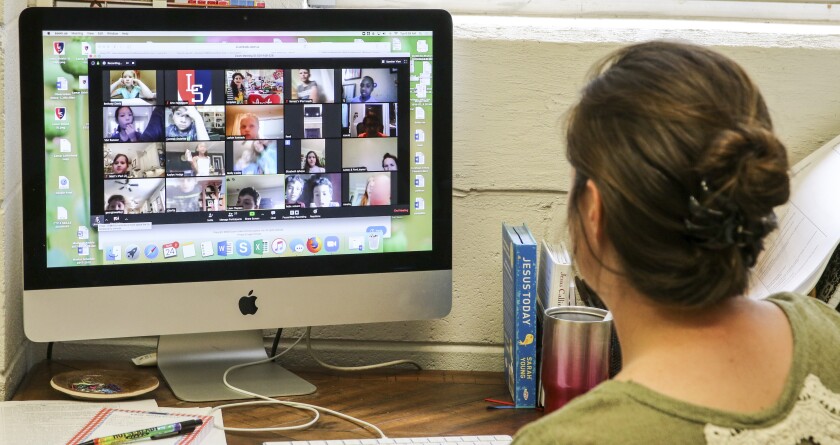



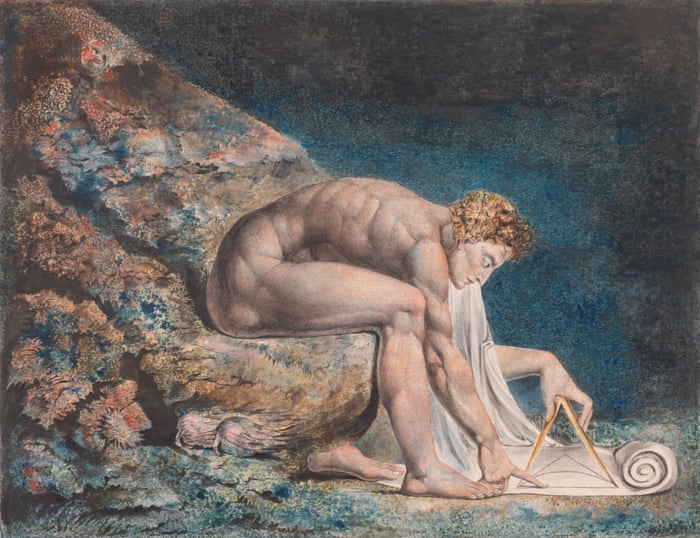


 Second Innings