On Goals, Motivation, Goal-setting and KPIs.

brown and black running tracks

At the end of my City career I was expected to draw up a set of KPIs for my team. I had a huge philosophical struggle with it. Goals and targets have a place, but too often the wrong things get measured. It can, at extremes, lead to unethical behaviour. The more I involved my line management and other senior colleagues in attempting to find something appropriate and valuable, the more we lost our way. I became outright stubborn about the worthlessness of the exercise. It may have contributed to the redundancy notice that came my way a few months later, but I was exhausted by my City career.

It had, for me, and for many of my colleagues, become increasingly miserable and unrewarding since the 2008/9 Crisis, (emotionally rather than financially; nobody need cry for bankers!) and I was ready to go. I am not convinced, though, that I was wrong to stand against the pointlessness of arbitrary targets with no clear impact on the business’s success and productivity. I still feel it was a distraction that undermined any plans I had to make us more valued and productive.

I was a few months into my Business Psychology degree. A recent module was solely about Motivation. One cannot avoid Goal Setting Theory, which spawned KPIs, when considering Motivation. The empirical evidence suggests I should have softened my stubborn attitude, but the more I studied, the more comfort I gained from the academic work on how else team members might be motivated.

This was the assignment that I completed in answer to the statement, “Goal Setting Theory is nothing more than a Technique: the other Process theories offer more to our understanding employee motivation.” Discuss. I wonder whether any of my industry contacts who read this will want to share their opinions. Leadership and Motivation remain two of the facets of Business Psychology that most intrigue me. See what you think.
person about to lift barbell

In discussing Goal Setting Theory (GST), I have isolated the comparison of technique, with theory, before addressing the issue of whether other Process theories help us to understand employee motivation better. I conclude that, despite Locke’s own observations, that GST is more theory than mere technique, and that its place in the theoretical family of motivation is alongside two other classic theories, Equity and Expectancy (also known as VIE), which I argue are inferior to GST. I argue GST is the father of most subsequent theories; that they are derivative, and therefore I dispute that other Process theories offer more understanding, merely enhancement. 

Sampling several dictionaries suggests consistency in definitions for both the word ‘technique’ and for ‘theory’. A technique is a particular method; a way of carrying out a particular task and a systematic procedure, formula or routine. It has specificity. By contrast, a theory is a system of ideas; a formal set of assumptions or accepted facts; the belief used as the basis for action and abstract reasoning. This suggests plurality. Is GST specific, or does it encompass abstract reasoning and a formal set of ideas? I argue that it is unspecific; therefore, a theory and not a technique.

Furthermore, it is the consequence of an inductive research process, whereby the process begins with observations, which are developed into abstract generalisations, then theory. There is something problematic about this conclusion, however, as Locke (Locke, 1975, Locke and Latham, 2019) himself, at least initially, referred to it as a technique, but the iterative processes that included developments like the High-Performance Cycle (Locke & Latham, 1990) confirm to me that theory is the appropriate definition. In a half century retrospective (Locke and Latham, 2019) the authors noted that “we did not begin our research with theory building in mind”, but a theory it has become. 

The world of workplace motivation, described by Latham and Pinder (2005) as “a set of energetic forces” in which work-related behaviours were given direction and duration, was initially interpreted using ‘Needs Based’ Theories. These attempted to explain ‘what’ motivated employees. The best known is Maslow’s Hierarchy of Needs (1943), albeit not specifically workplace related. It was succeeded by McGregor (1957), whose Theory Y emphasised self-control.  Both suffered a lack of data measurement and empirical research. To come was Alderfer’s (1972) ERG theory and Herzberg’s (1959) 2-Factor Theory.

Relevance and validity were developing, but the ‘what’ question was morphing into interest into the ‘how’ question. Successor theories became known as ‘Process’ theories. In answering ‘how’ we are motivated, the focus is one of cognition. Conscious cognitions are open to measurement, helping improve motivation understanding and being useful as a practical tool for workplace management. They are sometimes divided into ‘Classic theories’ and derivative theories. The first of the classic theories is ‘Equity Theory’. It, (Adams, 1963) was influenced by Festinger’s (1957) Cognitive Dissonance Theory. It is that employees are motivated by a ratio.

That ratio is outcomes to inputs. Typically, outcomes would be remuneration, recognition and status relative to inputs of effort, education and experience. If it is inequitable then the employee will lower inputs (he/she is ‘demotivated’) or less usually, work harder to merit the outputs. Its weakness lies in imprecise measurement. Weak productive power, (Locke (1975), referred to its “vagueness”) led to it being largely replaced by Expectancy Theory, although it has evolved. It is the foundation of the more contemporary Organisational Justice Theories, eg. fair and transparent distribution of rewards. 

Expectancy Theory was developed from the work of Tolman (1932) and Lewis (1935), which assumed that behaviour was an outcome of the combined relationship of expectations and relevance or valence. Vroom (1964) extended these initial ideas into a specific work motivation theory. ERG theory introduced how valence judgements are made. For Vroom, a multiplicative relationship between expectancy, instrumentality and valence (VIE) manifests in ‘motivation’. He wrote of ‘force’. The strength of Vroom’s work was a focus on job performance ie perform well, and enjoy a pleasant, expected outcome. In 1975, Locke, still to develop his work into GST, described VIE as “the most popular approach to motivation”, but disliked its rationale of pleasure seeking, “it would be more accurate to say that individuals strive to attain goals, values or purposes”. 

Porter and Lawler (1968) attempted to address some of VIE shortcomings, such as the origins of each of V, I and E, and also whether there was a relationship between Vroom’s ‘beliefs’ and actual job performance. In so doing they extended ‘Expectancy’ to job satisfaction as an outcome of accomplished performance, which led to the realisation of both intrinsic and extrinsic reward systems. Expectancy theories were getting better at addressing individuality. They did not yet address role clarity of employee ability; consequently, a highly motivated individual may not deliver required performance outcomes, thus failing to enjoy job satisfaction.

Expectancy models were meta-analysed by van Eerde and Thierry (1996); limitations emerged, specifically that there was more of a relationship with intent, than with performance outcomes. A number of the historic studies were questioned given the dependence on self-reporting and a concurrent lack of reliability. The theories failed to address complexity, habit or unconscious motivation. Statistical conclusion validity concerns emerged over between-persons and within-persons research designs. However, VIE has provided foundations for subsequent workplace motivation studies. They lay the ground for House and Mitchell’s (1974) Path-Goal theory, which in turn stimulated interest in goal setting, and Pritchard et al’s (2002) productivity measurement and enhancement (ProMes) system. 

If VIE is about forces and beliefs; goal setting is about intentions. Based on a 1935 experiment in England by CA Mace, comparing a task with an exhortation to “do your best”; it developed inductively over several decades. It has established foundations for subsequent derivative theories. It was first presented as a theory (Locke and Latham, 1990) to contrast it with earlier research considering goal setting as a technique. In 2003, Mitchell and Daniels (cited in Latham and Pinder, 2005) described it as “easily the single most dominant theory in the field”, highlighting research extending over a thousand articles and reviews. Locke had been a student of Ryan, who had proposed that behaviour is regulated by intent.

Neither of the other classic Process theories address intent/intentions. GST posits that setting specific high goals leads to higher performance compared with no goals; the higher the goal, the higher the performance, and goals direct attention and effort and inspire persistence. GST (Locke & Latham, 2002) is based “on Ryan’s (1970) premise that conscious goals affect action”. Note the ‘conscious’. Furthermore, feedback moderates behaviour with regard to the goal. “Rational human action is goal directed” stated Locke (1977). This followed work on assigned versus participative goals undertaken by Latham & Yukl (1975). 

There are issues to be resolved over goal conflict, which can often motivate unethical behaviours. Ordonez et al (2009) made an amusing, but a serious point. Misselling, especially in the financial products industry, is a typical outcome of energetic goals setting – the most recent infamy being Wells Fargo, where salespeople’s goals led to the creation of fraudulent accounts. Also, Kanfer & Ackerman (1989) discovered that goals that were unrealistic, ‘stretch goals’ that were beyond a person’s training or capability, had a deleterious effect on motivation. Kehr (2019) suggested that GST was “firmly entrenched” but criticised its narrowness.

Goals are not the perfect or only motivational tools an organisation should employ. GST has enabled us to understand mediators and moderators, although more theorising needs to be done on Freudian concepts of unconscious drives as motivation. Kehr felt that the theory needed to better explain why individuals of similar skill sets did not achieve the same goals, in the same time frames. Locke and Latham (2019) agreed that “GST is not, and was not meant to be, a comprehensive theory of motivation”. However, it continues to broaden, for example Locke, Latham & Fassina’s (2002) work on the High-Performance Cycle. 

Control theory (Carver & Scheier, 1981) was one of many motivation studies that was derived from GST. It is sometimes referred to as Self-Regulation of Behaviour. The theory suggests that the ‘discrepancy’ between an employee’s performance and a goal, automatically triggers a response to narrow the discrepancy. The goal is a motivator and the negative feedback loop of under achieving the goal sustains the motivation. Its merit is it recognises individuality and dynamic behaviour i.e. that employees constantly adapt and revise what is needed to achieve a goal.

It also attempted to address a GST shortcoming insofar as it acknowledged that employees usually had several concurrent goals, and arranged them into hierarchies. Bandura (1989) was critical, asserting that goal setting is also ‘discrepancy-creating’ and therefore there was a forward-thinking loop. Locke & Latham (2002) asserted that it was a “mechanistic version of Hull’s drive reduction theory”, treating human behaviour as repeatable, like a machine, when machines have no goals of their own, merely those of the machine-builders. 

Bandura’s (1997) Social Cognitive Theory has provided the main challenger to GST amongst the Process Theories of Motivation. At the core of the theory is the notion of self-efficacy. Self-efficacy is a personal appreciation of one’s ability to complete a goal. There is a triadic relationship between personal factors, behaviours and environmental factors, meaning any change in one of the triad will affect the other two. Employees with high self-efficacy set high(er) goals and commit to them; those with low self-efficacy abandon goals in the face of setbacks. The GST authors see Bandura as additive to their theorising, not competitive with it. (Locke & Latham, 2002).

This extends to goal commitment (Seijts & Latham, 2000). Erez & Judge (2001) noted that GST had strong empirical support but stumbled when difficult and specific goals were “only motivational dependent upon goal commitment”. Erez & Zidon (1984) had combined field and lab studies to conclude individuals with positive self-evaluation tended to be better performers. This extended GST into new areas, such as ‘Affect’. Tubbs & Ekeberg (1991) had already divorced intention from goals, which are “the objects of aims”. In their view, intention “subsumes the concept of goal”. 

In comparing GST with ‘other Process theories’ in understanding employee motivation it is important also to consider the merits and demerits of Self Determination Theory (SDT) (Deci & Ryan, 1990). Typically categorised as ‘Needs’, not ‘Process’, it shares a link with cognition that is core to all the Process theories. SDT is about satisfying the ‘needs’ for autonomy, relatedness, and competence for intrinsic motivation, and distinguishing between autonomous and controlled motivation.

The more freedom individuals have, the greater their sense of autonomy, motivating higher levels of interest in the goal. The difficulty with it lies in direct application to the workplace (Fay & Frese, 2000), because the workplace is heavily weighted to extrinsic motivators. Extrinsic motivators can actually undermine intrinsic motivators; a shift in the locus of causality. There are difficulties in assessing the strength of the motivators too. Furthermore, it fails to address the issue of negative emotion as a motivator, as in “I’ll show you”, when one has been told a goal is unachievable.  

Being inductive, not ‘hypothetico-deductive’, has lengthened the time available to GST’s development. It has spawned much subsequent research enhancing our understanding of motivation eg. Learning and Performance Goals. In their own review, the authors (2019) stress the benefit of new iterations and concede that the initial focus on conscious goals may need broadening in scope; “Once a theory is formulated inductively, the theory is open to further development”. It has endured because it is measurable – and demonstrated relevance across different durations, cultures, ethnicities etc.

Terpstra & Rozzell (1994) found significant correlation between “goals setting and organisational profitability”, supporting its value. Even in the public sector, Wright (2001) found that 75% of the variation in work motivation was explained by GST variables (difficulty, specificity and self-efficacy). The Other Process theories – predecessors have limitations, successors are largely derivative – whilst enhancing our understanding of employee motivation, have not necessarily offered ‘more’, by way of scope. GST deserves its current primacy and is more theory than technique.

References

Adams, J.S. (1963). Toward an understanding of inequity. Journal of Abnormal and Social Psychology 67 pages 422-436. 

Alderfer, C.P. (1972). Existence, relatedness, and growth: Human needs in organisational settings. New York: Free Press.

Bandura, A. (1989). Self-regulation of motivation and action through internal standards and external goal systems. In L.A.Pervin (Ed.), Goal concepts in personality and social psychology (pp.19-85) Hillsdale, NJ: Lawrence Erlbaum

Bandura, A. (1997). Self-efficacy: The exercise of control. Stanford, NY: W.H.Freeman

Carver, C.S. & Scheier, M.F. (1981). Attention and self-regulation: A control theory approach to human behaviour. New York: Springer-Verlag. 

Deci, E.L. & Ryan, R.M. (1990) A motivational approach to self: integration in personality. In R. Dienstbier (Ed.), Nebraska symposium on motivation 38. Pages 237-88. Lincoln: University of Nebraska Press

Erez, A. & Judge, T.A. (2001). Relationship of Core Self-Evaluations to Goal Setting, Motivation and Performance. Journal of Applied Psychology, 86 (6) pages 1270-79.

Erez, M. & Zidon, I. (1984). Effects of goal acceptance on the relationship of goal setting and task performance. Journal of Applied Psychology. 69 pages 69-78.

Fay. D. & Frese, M. (2000). Conservatives’ Approach to Work: Less prepared for future work demands? Journal of Applied Social Psychology 30 (1) pages 171-95.

Festinger, L. (1957) A theory of cognitive dissonance. Evanston, IL: Row Peterson.

Herzberg, F., Mausner, B., & Snyderman, B.B. (1959). The motivation to work. New York: Wiley.

Kanfer, R. & Ackerman, P.L (1989). Motivation and cognitive abilities: An integrative/aptitude-treatment interaction approach to skill acquisition. Journal of Applied Psychology 74 pages 657-90. 

Kehr, H.M. (2019). Goal Setting Theory – Firmly Entrenched, but Narrow in Its Focus. Motivation Science 5 (2) pages 110-111. 

Latham, G.P & Pinder, C.C. (2005). Work Motivation Theory and Research at the Dawn of the Twenty-First Century. Annual Review of Psychology 56 pages 485-516.

Latham, G.P. (2012). Work motivation; history, theory, research and practice. Thousand Oaks, CA: Sage Publications Inc. 

Latham, G.P., Locke, E.A. & Fassina, N.E. (2002). The high-performance cycle: Standing the test of time. In S. Sonnentag (Ed.) Psychological management of individual performance (pp.201-28). Chichester, England: Wiley.

Latham, G.P. & Yukl, G.A. (1975). A review of research on the application of goal setting in organisations. Academy of Management Journal. 18 pages 824-45.

Locke, E.A (1975). Personnel Attitudes and Motivation. Annual Review of Psychology 26Pages 457-80.

Locke, E.A. (1977). The Ubiquity of the Technique of Goal Setting in Theories of and Approaches to Employee Motivation. Academy of Management Review 2Pages 594-600

Locke, E.A. (1997). The motivation to work: What we know. In P.Pintrich & R. Stablein (Eds.) Advances in motivation and achievement vol 10. Greenwich, CT: JAI Press.

Locke, E.A. & Latham, G.P. (1990). A theory of goal setting and task performance. Englewood Cliffs, NJ: Prentice Hall

Locke, E.A. & Latham, G.P. (2002). Building a Practically Useful Theory of Goal Setting and Task Motivation – a 35-year Odyssey. American Psychologist 57 (9) pages 705-17.

Locke, E.A. & Latham, G.P. (2019). The Development of Goal Setting Theory: A Half Century Retrospective. Motivation Science 5 (2) pages 93-105.

Locke, E.A. & Latham, G.P. (2019). Reply to Commentaries on “The Development of Goal Setting Theory: A Half Century Retrospective. Motivation Science 5 (2) pages 114-115.

Maslow, A.H. (1943). A theory of human motivation. Psychological Review 50 pages 370-396.

McGregor, D.M. (1957). The human side of the enterprise. Management Review 46 pages 22-8. 

Ordonez, L., Schweitzer, M.E., Galinsky, A. & Bazerman, M. (2009). Goals Gone Wild: How goals systematically harm individuals and organisations. Academy of Management Perspectives 23 pages 6-16. 

Porter, L.W. & Lawler, E.E. (1968). Managerial attitudes and performance. Homewood, IL: Irwin.

Pritchard, R.D., Paquin, A.R., DeCuir, A.D., McCormick, M.J. & Bly, P.R. (2002). The measurement and improvement of organisational productivity: An overview of ProMES, the productivity and measurement system. In R.D. Prithcard, H. Holling, F.Lammers, & B.D.Clark (Eds.), Improving organisational performance with the Productivity Measurement and Enhancement System: An internal collaboration (pp. 3-49). Huntington, NY: Nova Science.

Ryan, T.A. (1970). Intentional Behaviour. New York: Reinhold Press.

Seijts, G.H. & Latham, G.P. (2000). The concept of goal commitment: Measurements and relationships with task performance. In R. Goffin & E. Helmes (Eds.) Problems and solutions in human assessment: Honoring Douglas N. Jackson at seventy (pp. 315-332). Dordrecht, The Netherlands: Kluwer Academic Publishers. 

Terpstra, D.E. & Rozell, E.J. (1994). The relationship of goal setting to organisational profitability. Group and Organisation management 19 pages 285-94.

Tolman, E.C. (1932). Purposive behaviour in animals and men. New York: Appleton-Century-Crofts

Tubbs, M.E. & Ekeberg, S.E. (1991). The Role of Intentions in Work Motivation: Implications for Goal-Setting Theory and Research. Academy of management Review 16 (1) pages 180-99. 

Van Eerde, W. & Thierry, H. (1996). Vroom’s Expectancy models and work-related criteria: A meta-analysis. Journal of Applied Psychology. 75 pages 575-86. 

Wright, B.E. (2001). Work Motivation in the Public Sector: An Application of Goal and Social Cognitive Theories. Academy of Management Proceedings. 

The post-COVID world. How will it be for you? (2)

Physically constrained, with challenges to our autonomy and having our horizons narrowed might be a source of frustration. It is, though, a time for contemplation. What will happen post-COVID and more significantly, what do we want for the post-COVID world? Alain de Botton struck a defiant and an optimistic note when he said “we have never had a broader canvas on which to sketch ideas”.

Over the past few days newspaper articles and podcasts developing the very different ideas of the likes of Larry Summers, Willem Buiter, Henry Mance, Camilla Cavendish and US congressman, Dan Crenshaw, have had me thinking about what one might wish for. The elusive, intangible purpose of a life well-lived was central to the thoughts of self-actualisation in Jung’s psychoanalysis and Maslow’s ‘Hierarchy of Needs’. I think most of us want to believe we have a life well-lived.

Maslow

Summers, Clinton’s Treasury Secretary and a Chief Economist of the World Bank, is perhaps best known for his secular stagnation thesis. Given that it had no expectations of a pandemic and its resolution, it was to be expected that he would take a gloomy view of what lies ahead for us all. He thinks this particular coronavirus represents a potential “hinge in history”, and an event that will be regarded as “seminal” by future generations. 

He asks if the economic losses that are being borne, and the social disruptions, will be merely “transitory”. His focus is government: “we appear to be living through a momentous transition in what governments do.” He warns that climate change and pandemics present greater threats than militarism and domestic governance, terrorism or revolution. 

He is concerned by the potential of AI and information technology and that it is as likely, or more likely, to be harnessed for malign rather than benign intents. It reminded me of the recent film about Marie Curie’s life and how the outcomes of her radiation discoveries transformed both medicine and weaponry.

Summers asks if this pandemic heralds the end of “western democratic leadership of the global system”, exacerbated by the “dismal” performance of the current US Administration. He speculates, rather than concludes, that the twenty-first century will be an Asian century in a way that the twentieth was an American one. I wondered what that really meant, and if it was to be a bad thing. Korean and Singaporean influences might be very welcome, but I assume he meant more threatening Chinese or nationalistic Indian ones. 

As I mulled his article I turned to another economist, my one-time Citi colleague, Willem Buiter. He wrote a piece more focused on ‘who pays?’ I particularly liked the phrase that we were moving from “just in time economics to just in case economics”. The obsession of modern economies with ‘efficiency’ will give way to the importance of having well-maintained slack in the economy and greater ‘localism’ at the expense of ‘globalism’. 

And what of paying? It seems there are few alternatives to higher taxation and future public spending cuts; but what will be the tolerance for that at the ballot box? Governments will not be able to monetise massive budget deficits. Buiter mocks modern monetary theory “where fiscal bills never have to be paid”. 

He believes many ‘advanced’ economies will have to embrace “profoundly altered political systems”. He sounds a little like Summers when he writes as much. He notes that huge resources are being thrown at households and workers, also at companies, but “the burden of economic pain is being distributed highly unequally and regressively.” Presumably he means to tells us that is unsustainable. In a recent book review, he was highly sceptical of Thomas Piketty’s views, but now thinks the political climate may exist for “a redistributive and more progressive tax and public spending system”.

I grew up as a Thatcherite philosophically, and as a beneficiary. With urban regeneration part of her governments’ agendas and a place at the Cabinet table for the ‘One Nation’ Toryism, I was comfortable in my tribe. I am not sure that I drifted politically left much over the years, but that the debating ground had moved to the right. Hague, Howard and Duncan-Smith led a Tory party that had no great appeal to me. I thought Theresa May calling out “the nasty party” and Cameron’s interest in “Big Society” were a time for me to revisit my loyalties, but the last several years have become so much more ideological, that I have not felt a part of the society under design. 

Once, I could balance right wing economics with something more socially liberal and feel represented, but my faith in the economics ideas I grew up understanding and supporting, were damaged by the experiences of 2008/9. I think I have been trying to think what might be better ever since. The important thing in forming a view is to hear the counter arguments and to critique them, and form a newer, better-informed view. But the last half decade or so has been much more about tribalism and about emotion, than it has been about intellectualism and ideas. This crisis seems to offer a perfect opportunity to think about what is frequently described as “a re-set”. In other words, Alain de Botton’s “broader canvas”, which he described when suggesting that the virus might be “a gift”.  

I suppose I think that big government is here and inevitable. I am more supportive of redistribution than ever I was, and I can see the need for radical thinking on how to tax assets, as well as earned income. My own definition, and perception of ‘key’ workers, has changed. It all feels a little uncomfortably left-wing to the guy I was growing up. The issues of emotive rants and tribalism have made it far more difficult for me to hear right wing views, or to espouse conservatism. 

Fortunately, an excellent podcast, “The Economist Asks” interviewed Dan Crenshaw, a US congressman, who was badly injured on duty when serving as a US Navy SEAL, and lost the sight of one eye. Until this week, I had not heard of him. I am not convinced by everything he had to say, but he put the case for conservatism over liberalism extremely eloquently. His parents were in the Oil industry and he was born in Scotland. He certainly tore into the concept that coronavirus had heralded a new Big Government era that would rapidly come to be the new norm. Anne McElvoy, who is a fine journalist and a highly adept debater, was struggling to land her punches and, I thought, giving away her frustrations. I certainly felt that I would struggle in a one on one debate with Crenshaw, even if I did not accept all he had to say. 

Where he was especially good was on risk and risk measurement, as he explained his view on the reopening of State economies. His eloquence on not allowing circumstances to paralyse our response to circumstance impressed me, as did the authority a Texan-oilman might be expected to have on carbon, energy policies, Trump and the Paris Agreement. In a world that has become un-nuanced I have found myself herded into the anti-Trump, anti-Brexit, anti-sovereignty, anti-flag waving group and increasingly deaf to the claims of any right-wing politician, persuading myself that all of it is irrational and emotional. It was good to recognise I can be just as irrational, emotional and to actually hear and appreciate good discourse. 

Not all of my thinking and reading has been at the supranational and political theory levels. I am really intrigued by the smaller, perhaps more subtle, societal shifts we might see. I wrote about Dating and Desire recently, and I think it will affect people’s behaviour. I was amused by Alastair Campbell’s daughter, Grace, on their shared podcast, essentially implying that her generation, especially those who had been deprived of a lover’s contact for eight weeks or more, would go wild with sexual abandon. 

It is the world of work that has been a focus for the past week. The government’s enthusiasm to have more people back at work may be the reason. As a man, not currently in employment, I take quite a detached view of this, but I am interested in the impact for my eldest, and the employment prospects and conditions for my two university-student children. The FT has published a few articles about the nature and future of the office. In a blog from a few weeks back (“A Tale of Two Cities (and two journalists)”) I first thought about underutilisation of office space and how some might be repurposed for residential capacity, but that residents might no longer feel the need to live in the cities because they did not need to kill themselves with long and daily commutes. 

Henry Mance’s article in this weekend’s FT noted that in Central London, alone, more than 15m sq feet of new office space is currently under construction. I liked his “the key space where white collar workers interact will no longer be the four walls of an office; it will be the four sides of a screen”. Lucy Kellaway wrote a defence of offices, but it read more like a loving lament for a time that was passing.

The Tale of Two Cities piece dovetailed with Camilla Cavendish’s article this weekend, which asked if the era of the megacity was over. She noted the correlation with big city population density and COVID-19 mortality rates. 23% of US deaths have been in New York. 23% is the same stat for London’s share of UK deaths. In Madrid, it was 32% of Spanish deaths. 

She asked if suburbia will become fashionable again (hello, Sir John Betjeman). She hints at underutilised office space, echoing Mance’s thinking, and weeks filled with more WFH days than office days. A renewed desire to leave behind inner city pollution, crime and grind. It seems highly feasible to me. She notes how birth rates are lower in mega cities because of the smaller living spaces and the higher financial cost of living. Will there be a post-COVID baby boom generation? 

baby lying on fabric cloth

Even pre-COVID my eldest was telling me that she aspired to raise her children out of town, and that she intended a lifestyle-shift once she had established her career foundations. Cavendish cites a 2016 Bain report highlighting the “declining cost of distance”. She also talks about the urge for connection, which puts her in the de Botton camp: “People who moved to cities to escape the parochialism of their childhoods are now frantically building what I can only describe as villages”. Cities may need to respond with greener, more walkable centres to retain the young, wealthy and aspirant. 

So, I feel sure that politics and society are going to be changed by our experience of the virus, and I am far from sure that I know how that will manifest. But it is going to be source of much debate and like all structural change, it will unnerve many, but will ultimately yield as many good things as bad. Here’s to a little optimism…

The post-COVID world. How will it be for you? (1)

Idea, World, Pen, Eraser, Paper
What next?

In the immediate aftermath of the Global Financial Crisis the newest graduates from Harvard’s prestigious Business School were treated to an address from Clayton Christensen. The theme was “How Will You Measure Your Life” (HBR, Aug. 2010). Christensen wanted graduates to think about how they would think in future, with what were likely to be many untypical challenges ahead of them. 

In the past week, perhaps because of the lamentable, confused new government advice to “stay alert”, I have noticed a shift in mood, thoughts, temperament and media coverage of the lockdown experience. There is much greater engagement with ideas of what comes next. This was part of what Christensen wanted the newly-minted grads to consider.

Several of my friends and correspondents are debating what changes we might like to see and what a post-COVID world might mean for us all, but few of us have yet felt much change beginning externally, or within ourselves. Perhaps we need to be inconvenienced for longer and to see what the depth of the recession will do to our friends and families. 

Christensen’s address made me think of Daniel Kahneman’s book “Thinking Fast and Slow”. We have emotional and cognitive responses to all new ideas, concepts, shapes and people that are presented to us. There is nothing wrong with instinctive responses, but Christensen wanted to have graduates aware of when instinct and impulsivity inhibit good logical processes. This is especially hard in emotional fields like love and friendship, but still worth considering. I will come on to that when considering some of my friends’ responses to their lockdowns. 

Thinking, Fast and Slow
Emotional and Cognitive responses

Christensen asked graduates to ask themselves a) how can I be happy in my career? b) how can I be sure my family is an enduring source of happiness and c) how can I stay out of jail? There was nothing cute seeking a cheap laugh about the third question. Two of his 32 Rhodes Scholar class had spent time in jail, and his HBS cohort included Enron’s Jeff Skilling. 

What is your key motivator? For some it is money. In my ‘First Innings’ it was highly prized by me, although I am not sure it was my key motivator. Frederick Herzberg, author of the 2-Factor Hygiene-Motivator Theory, suggests it is the opportunity to learn, to contribute to others and to be recognised. That fits more with my ‘Second Innings’. 

The order of Christensen’s questions is deceptive. He noted that HBS reunions were littered with increasing numbers of allegedly ‘successful’ men (very few women) who were divorced and often estranged from their children. They had strategised successfully for their career, but it had been to the detriment of family lives. Without exception, all were a little broken by the experience. I am hearing from several friends that the lockdown has started them on a path to reappraise their career, and its importance to them. Have a strategy for family life. It sounds clinical and unnatural, but is true. 

My own experience is that I have the great fortune to have loving relationships with each of my children, but I still see the fact that I am divorced from their mother as something of a personal failure. I think that I am happier now, than when I was married, and I think my ex is too, but not gathering the family together, as we would have anticipated when our third was born, nibbles away at my self-esteem occasionally. 

Christensen told the graduates, “people who are driven to excel have this unconscious propensity to underinvest in their families and overinvest in their careers.” This is done in the sure knowledge that loving family relationships are the most enduring source of happiness in our lives. He was a man who had a deep faith. I do not, but all of us can sense something in these following words. “I’ve concluded that the metric by which God will assess my life isn’t dollars but the individual people whose lives I have touched”. 

I think that is elegant and profound. Talking to my friends about my Second Innings, I hear many of them thinking about what they want from the last half of their lives. The COVID-19 lockdown may be accelerating some of these processes. I have one dear friend who is struggling with the unresponsiveness of a man for whom she has deep admiration. She has decided for her own health that she needs to break from waiting for him to suddenly deepen their friendship into a romance. He has never misled her, but she has decided to avoid misleading herself.

Chess - Simple English Wikipedia, the free encyclopedia
Your move…

I have another friend who is agonising over breaking up his own family to pursue a new relationship. He is a fine and thoughtful man, who loathes the hurt that he knows will be inflicted on his spouse and his children. His love interest will also be breaking up a family unit. But, they are young(ish) and have known each other for decades, and know in their hearts and minds that they are best suited for one another. Locked down with partners that neither see as the person with whom they wish to grow old is a different form of purgatory, not least because of the deceit they continue to have to practise at home. 

Yet another friend is recovering from discovering that the man she thought would be making a home and a life with her, has decided that he cannot leave his marriage, despite having spent months asserting that was his need and desire. Apparently being locked down has reminded him how much pleasure he takes from his young teenage children. Before they flee his nest, he now intends to try to rebuild his marriage. 

Almost everyone I talk to is going through some sort of mental recalibrating. What do they want? What do they need? And, as Christensen asked “How will you measure your Life?”. The sports car, the directorship, the smart postcode lavish address. Ultimately these are ephemera and rarely provide what we think we want. Helping others, being respected and recognised, as Herzberg suggested, are perhaps better measures. 

In a recent interview, James Corden explored how people may be being changed by COVID-19 with author, Alain de Botton. I am a huge fan of de Botton’s “School of Life” and he had posted some materials about how it was time to “rethink our lives”. He suggested this particular plague might be “a gift”. It was forcing people to re-connect. It was generating fresh respect and regard. We were all getting better at acknowledging humanity in the people around us, and not just in Thursday night claps. He felt the pressure to strive and achieve was making way for the “good enough’ ideas of psychoanalyst, Donald Winnicott. 

Time was given to the Stoic philosophers, and learning to prepare for the disappointment of life. De Botton noted that we are becoming more adept at being friends to other people, but that that was far from unusual. What was important was learning to be a friend to oneself, which anyone exploring therapy and analysis knows is a much more demanding challenge.

But, if you, like me, are thinking about what a post-COVID world looks like on a personal level, and perhaps thinking about your own ‘Second Innings’, de Botton’s advice is good, “be ambitious about how we want to live”. In other words, think like Christensen, of how one might measure a life. 

Lockdown literature joys

No photo description available.
Time for some Dickens

I have long been one of life’s book stockpilers. Books to be read “one day”. When I was younger, I got as much of a thrill from the ownership of some books, as I did from wading through the content. Books are such wonderful ‘little luxuries’. Usually affordable, and always affecting. My particular treat was buying from The Folio Society. I had shelves full of well known, and lesser known titles.

Perhaps I thought they conferred intellect and status upon me, just because I could display them, but for whatever reasons, most were barely opened. Some, because I had already read them in a soft-back copy, but I liked collecting Folio sets, and some, because they were a little daunting, but fitted my ‘one day’ category.

Now, it seems that “one day” has probably arrived. Where to start? Book deliveries are still happening, but I expect many, like me, have started to revisit their own shelves and been reminded of favourite characters, or of the time, or place when a book was bought, or even, why it was. Perhaps it was the encouragement of a significant other; perhaps, it was to complete a set. I have been amused by our new ‘zoom economy’ and how it has become associated with book display chic. I find myself speculating about how many of these books have been so much as opened, and about how recently they were placed in what has become the camera’s view.

For me, it has prompted a rediscovery of Dickens. I read a number of his works in my teens, but somehow fell out of the habit. Great films keep him alive for me, and also some wonderful theatre. In the past few months alone, I have been entranced by the Old Vic’s “Christmas Carol” and the brilliant film of “David Copperfield”. I have all the Dickens in one beautiful Folio Society set, but it is currently boxed up, after a handful of house and flat moves since 2014.

It took a nudge from my daughter, who was checking what treasures were still in the boxes, to make me want to read him again. We are both fans, but realised that we have left more of his work unread, than read. She suggested we choose two novels, unfamiliar to us both, read them, swap notes and swap books.

It brought me into the literary acquaintance of Daniel Quilp, honest Kit Nubbles and poor, sad, innocent Little Nell. I had picked up The Old Curiosity Shop. Dickens tends to be associated with characters – Miss Havisham, Fagin, Uriah Heep, Smike, Dodger, Pip, Bumble, Scrooge and Micawber. The Old Curiosity Shop, too, has wonderful characters, but it is lodged in the collective memory for an incident, rather than a character, and that is the death of Little Nell. When it was published first, in a periodical, the death caused widespread public mourning. It impressed Oscar Wilde less, who thought that any tears should be those of laughter. Perhaps only the murder of Nancy in Oliver Twist, comes close, and that has more to do with the film Oliver, than to its reception in Dickens’s life time.

Reading Dickens after some time is an odd experience. He is rightly revered for character and caricature but as I read, I found myself thinking about the fineness of a modern author like Hilary Mantel, in drawing her characters’ portraits. Her recently published The Mirror and the Light exemplifies this skill; she makes as much of Anna, the poor young woman sent over from Cleves, as she does of the king, and of her scheming protagonist himself. In fact, I started to be troubled by Dickens’s characters for being one-dimensional.

In The Old Curiosity Shop, with the exception of Sally Brass, who is frequently described approvingly for her male qualities, the women are one-dimensional, or underwritten. They are collectively passive and amazingly forgiving and long-suffering. I found it a little problematic until I began to think more about metaphor and about representation. The women, Kit’s mum, Nell, Mrs. Quilp, Barbara and ‘The Marchioness’, who marries Swiveller, all share a victimhood. Dickens was unfashionably early to lambast the patriarchy. Of course he was no saint of equality himself when it came to his personal life. However, he seems to have a strong sense of the age’s gender inequality.

What I had found problematic, until thinking about it after reading the final page, is I now see, a portrait of innocence and frailty. A plea for women to be better cherished. And with the exception of the luckless, but much-loved Nell, they all come to a good end. Mrs. Quilp and Kit’s mum become wealthier and more comfortable, and ‘The Marchioness’ and Barbara both leave penury, or servant status, to make good marriages.

If the story is new to you, it is about the wickednesses of avarice and gambling (a low point is when Nell is robbed by her grandfather and then finds him, the following night, back at the cards). Alcohol too, is represented as much more social vice than social accessory, so it may be that Dickens was highlighting all addictions. It makes a nod to the unwelcome ‘benefits’ of industrialisation and it addresses social class and snobbery with a wicked mockery of ‘Miss Monflathers’, who commands a kind of ladies finishing school.

The orphaned Nell dwells with her grandfather in his antique shop, as indicated by the book’s title. She has a feckless brother who has an adversarial relationship with the old man, and her only other company is the illiterate shop boy, a few years her senior, Kit. The grandfather, motivated by a desire to improve Nell’s situation and material comforts, has come under the money lending spell of Quilp.

Keen to clear his debts and to provide for Nell, he turns to gambling and duly loses his shop and their accommodation. They are turned out on to the streets and go wandering beyond London, begging for their means, and make it to the Midlands where briefly they are befriended by an iron smith. The horrors of the smithy and of the industrial complex being built around it gave Dickens the chance to make some socio-political commentary, common to most of his novels.

Nell’s brother is convinced the old man has hidden a vast fortune. One of his schemes to get to it, is to persuade his rather simple friend, Dick Swiveller, to marry Nell and share the fortune. The scheme becomes known to Quilp. Swiveller joins a duplicitous lawyer, Samson Brass, and his sister, Sally, in their office in Bevis Marks, at Quilp’s engineering. Swiveller takes pity on a much maligned servant girl there, who comes to be known by his nickname for her, ‘The Marchioness’.

Kit has found fresh employment and is bettering himself. He is discovered by ‘the gentleman’, who has his own reasons for pursuing the old man and Nell, and they combine forces, but Kit is framed for the theft of a five pound note, by Brass, instigated by Quilp, and is held pending transportation. Only the remarkable evidence provided by ‘the Marchioness’ saves him, and the realisation by Swiveller that he is in poor company and wishes to redeem his own conduct. As the evidence turns, based on a confession from Brass, Quilp realises he needs to escape. In trying to do so he falls into the river. It could be suicide, but is more likely the unintended, unmourned death of evil, for this tale.

A coincidence, of which Dickens’s plots often rely, and which stretch credulity without ever spoiling the narrative, means that Kit’s employer becomes aware of her new resting place. The single gentleman, who turns out to be Nell’s grandfather’s younger brother, and Kit chase around the country to find Nell and the old man. They discover Nell on her deathbed and the old man wracked by gambling guilt, grief and the trials of his journey. He has suffered a mental breakdown and cannot accept her death until he dies shortly afterwards.

Despite the coincidences and the female characterisation, I loved it, as I loved all the Dickens I have read in the past. I am not a Cockney, as Dickens was, but am proud of my mum’s family’s East London connections and I think it is for that reason I have such an affinity with his work. I have to read the choice my daughter made next, when she has finished it, but I might grab something else first. I have not read Barnaby Rudge or Dombey and Son, so they may be up soon.

For now, I have a great pile of unfinished Christmas presents, never mind a large handful from my April birthday, but I think perusing my own shelves may turn up some good stuff. Who knows, if lockdown persists for very long I might (at the fourth attempt) see off Ulysses and finish Don Quixote. I wonder what old novels, but new joys, everyone else is discovering? If you are happy to be transported back in time, I definitely recommend Mantel, and of course, Dickens!

Dating and Desires now

A sexual face. Goods in sex shop a sexual face pack toys for adults sex shop carnival mask royalty free stock photography
Seduction and disguise. Dating and desire.

Sexuality defines us in healthy and essential ways. It is said that ‘there can be no sexuality without anxiety’. Repressing desire is unhealthy. Last weekend the FT carried an article by Madison Darbyshire in which she described how her love life was ‘flourishing’ under lockdown. At the same time, a psychotherapist friend of mine was discussing what happens to desire in these circumstances. The world is fairly familiar with Freud’s core ideas, especially that sexual repression and denial can be damaging mentally. Sexual theory was what he regarded as his most important work. We thought that post lockdown, more candour and less inhibited behaviour might be noticeable. 

For Freudians, human behaviour is driven by the ‘pleasure principle’. How much pleasure is there for a society in lockdown? He claimed that sexual desires were controlled by the ‘reality principle’ ie conforming to socially acceptable behaviour. Put another way, unbridled pleasure is repressed by the reality principle. It is the clash between Eros (sexual desire, intimacy and love) and Thanatos (death and the fear and attraction of death). It gets buried in the unconscious, where we defend ourselves from revealing our true selves. My friend and I think that is being exacerbated by current conditions. 

Darbyshire claims a surge in ‘dating’ in the remote, lockdown world. She describes shared drinks, shared movies and shared card games. She notes that it has upended the expression ‘to date’. She quotes some Tinder statistics. ‘Conversations’ on the site are up 20% since mid-February, and on 29 March, it set a new record for ‘one day swipes’. 

Dates, it seems, are now ‘planned with Zoom’. They are time limited, to satisfy the sharing of one drink. If it goes well, the Zoom time-clock is re-set and a second drink is poured and consumed. I liked her observation that “online dating has become anything but impersonal. A conversation with someone sitting in their kitchen, living room or bedroom is intimate in a way that a first drink in a bar can never be.”

Can video chatting stay exciting? It seems, so far, the answer is a resounding ‘yes’. There is some discovery of the multi-layers of two personalities. Alain de Botton’s School of Life has addressed dating at a distance in its promotional materials. Much of the School’s work is about conversations, about communications and about connection. It goes way beyond the intimate and personal spheres; more a manifesto for a better world. But in addressing dating, the point is made, “if a date is at heart an audition for emotional capacities required for the success of a long-term relationship, the real purpose of conversation must be to try to understand the deep self of the other person”. 

Now, before we address the psychoanalytic challenge of whether any of us are comfortable knowing our own ‘deep self’, this seems to me to perfectly segue from Darbyshire’s article. The School of Life even sells ‘dating cards’ with examples of questions to ask. I quite like this premise. A couple of examples: “who would you like to go back and apologise to – and what for?” And, “what are the main points you would like to be covered in a speech at your funeral?”

Tasty fresh oysters with sliced lemon on cutting board. Aphrodisiac food for increasing sexual desire.  stock photo
Aphrodisiac

This is something of a refresher for me. In my online dating experiences, shortly after I divorced, I became used to an almost formulaic timetable. Everything was lust/desire led. Sexual compatibility was the starting point for a possible emotional connection. A reversal from my pre-marital dating experiences.  The ‘are we, or are we not’ establishment of sex potential was concluded by date 2, and some time later the momentum shifted from the physical to more emotional connection. I thought I may have met some unusually direct potential partners, but a number of my friends had similar experiences. 

I very much enjoyed the whole experience, but wearied of it when I realised that even those suggesting they “only wanted some fun and some company” really were looking for much more emotional depth and engagement.  I was too soon out of the most significant relationship I ever expect to have. Emotional engagement was beyond my capacity to share then. But I like what Alain de Botton is driving at with his cards for dating, and Ms Darbyshire’s points. Perhaps old-fashioned words and phrases like “Stepping out” and “courting” will enjoy a revival? 

Darbyshire thinks that the ‘first date is a video date’ model, may survive the end of quarantining. It is cheaper, more time efficient, intimate, but easy to leave. I think she may be right. That is not to suggest that physical contact will be unfashionable. Which brings me to ‘desire’. My psychotherapist friend and I both think that there is likely to be a shift in behaviours, if quarantining gets relaxed. I don’t really like the war analogies for coronavirus, but the longer it goes on, the more one might expect the decadence of the Roaring Twenties, and the pick up in affairs and the collective sexual appetites of the late Forties. 

My friend said that she herself was finding that her mind was much more filled with erotic thoughts, and that she felt the lockdown was stirring her unconscious. She thought that that might be true more widely. The collective unconscious is being stirred. She was sure that her id was wresting control from her ego. She was more in touch with her primary drives. For Freud, of course, sexual drive is at the core of his approach to uncovering the archaeology of the mind. He worked through stages of psychosexual development and asserted that even neonates were sexual creatures. 

From the outset, the baby sucking at the teat is establishing a bond. This is the oral stage. The infant feeds and pleasures by engaging with the mother’s nipple. The mother becomes the first love object replacing the breast as the first object of desire. Films of infants’ faces after they have suckled and sated their needs, show remarkable similarity of expression to an adult male’s face, when he is sexually sated, and has ejaculated.

The oral phase is replaced by the anal phase. The child has its first sense of mastery ie of the anal orifice. Admired for the timing of his or her defecation, it has an effect on adult attitudes to tidiness and to messiness. The use of the disparaging, he or she “is so anal” is quite common when describing adult contemporaries. The phallic phase follows. Despite its name it applies to boys and to girls. It is a period of fascination with one’s own genitalia and introduces Freud’s ideas on the Oedipus Complex and the Electra Complex. This is the realm of castration anxiety and penis envy. 

Much of his work here has been discredited, but the ideas have remarkable durability. It is a time of separation anxiety and for most children coincides with leaving their mother at the school gate and how they manage that challenge. The ego becomes trained to follow the ‘reality principle’ and to control the ‘pleasure principle’. Conformity applies, social conventions are followed.

Latency follows. This is when there is acceptance of the mother’s place in the father’s affections. The Oedipal drives become contained. A period of relative indifference to one’s sexuality, until a blossoming into the genital phase, a resolution of transitioning from latency to mature sexuality, when a love object to replace the primary caregiver (mother/father) is found. Some people get stuck in the latent phase. This manifests itself in adult ‘immaturity’ and an inability to form fulfilling, lasting relationships. 

I can observe the impact of desire and frustrated desire on my own family. One daughter is fortunate enough to be quarantined with her boyfriend. The other has had to endure my flatmate skills, whilst not being able to be with her man, who was very ill with the virus. My son is isolated and has the frustration that his girlfriend lives nearby, but as a NHS worker, sharing a home with a front-line nurse, is very high risk. He is having to manage without seeing her. I wonder what it is doing in other homes? Is it even worse for adults together, but sharing small living spaces with their young adult children?

I see changing habits on Instagram and other social media. Some of the content today is much more about exercising the ‘look at me’ gene, typically associated with actors and performers. I think that this has shifted in just four weeks. An academic at my university used to post pictures of sunsets and sunrises from her South London vantage point, and I ‘followed’ her. Now she has taken to displaying her ballet dancing skills. She videos herself doing very demanding stretch exercises and steps, attired in ever-briefer, tighter, dance and gym garments. I suspect this may be related to frustration. 

A former colleague posted a video of her skill in removing a pair of pyjama bottoms, by dragging one foot against her leg, whilst maintaining a handstand. Once free of the pyjamas, she is clad in quite a skimpy crop top and pants, and reveals a finely-toned body. Would these videos have been shared pre-COVID? My suspicion is that they would not.

My psychotherapist friend wanted to explore what desire and frustration was doing to us and to people we knew. She was interested to hear about how my playwriting partner and I share scripts, which we edit together, thanks to the wonder of googledocs. Her response was to suggest that we attempted to co-write an ‘erotic journal’. Would this relieve our desires and frustrations, or merely exacerbate them? It turns out, that there is a reason why writers think that writing about sex is the most difficult thing to do. There is an equally good reason why the ‘Bad Sex’ writing awards generate so much mirth. I have never worked with a couples’ therapist, or been a client of one, but I imagine this is an exercise they recommend.

Writing can allow fantasies to be expressed that may be too uncomfortable when said face to face, even to a loving partner; perhaps, especially to a loving partner. But for a loving couple the poor writing, or the tawdriness of it, can be an excuse for laughter, which is often a catalyst for intimacy. Sexual fantasies alarm us; they often include ‘perversions’. Having fantasies does not mean we need to act them out, but they can be a form of relief. I learned that any sort of erotic writing is painfully difficult and repeatedly asks questions of oneself. I am not good at it! 

I mentioned it to a couple of friends. One lives on an island off the British mainland and his lover is in London. He almost has a double frustration. Urban dwellers can fantasise about lovers breaking lockdown, and stealing some passion, however inappropriate that might be, but he can hardly dream about his lover breaking quarantine and dashing to the coast and swimming into his arms! His remoteness made his need for intimacy all the greater. I doubt he will write though.

It is not as if it is a new thing. There is precedent for writing to work as relief. In the 1830’s, well-to-do translator, Sarah Austin, fell in love with the author of the book she was translating, a German Prince, Hermann von Puckler-Muskau. They did not meet for years and by then the ardour had drained, but for years, he was the release for her own sexual frustration. She told him, after a mutual acquaintance had been less than flattering about her beauty, that “all that is beneath the petticoat is worth one thousand times more than the rest”; her prospective lover would be pleased by what he found “in the dark”. It is assumed that she was not referring to the lighting in the room!

When describing her womanly qualities, “I like riding full gallop”, had nothing to do with equestrianism, and for emphasis and understanding, “what rapture it would be to minister in any way to the pleasures of a man who loved me”. She exuded sexual adventurism through her pen, “in your bed, I should be more glorious if I could invent a new pleasure for you”, and “Cleopatra herself could not exceed me as a bedfellow”. 

Recensione: "Eyes Wide Shut" | IL BUIO IN SALA
Eyes Wide Shut

In Kubrick’s 1999 film, Eyes Wide Shut, Tom Cruise is improbably in a loveless, sexless union with Nicole Kidman. It is based on Schnitzler’s “Traumnovelle” or “Dream Story”. I enjoyed it when it was released, but I wonder if it is going to be better when I watch it next. It feels like a film for these times. The themes are desire, inequality, class distinction, and plague. The plutocrats who run and attend the orgy, cover themselves in gowns and masks to obscure their identity. Women wear masks but not much else. The costumes have been likened to those worn by C14 doctors treating the bubonic plague. The strange bird beak masks were used so that thyme and spices could be stuffed into the beaks to obstruct the airborne transmission of disease. The orgy is about being able to satisfy desire without emotional connection. Cruise’s doctor protagonist is literally unmasked, because he cares – in his case, for the prostitute, Domino. It was set to reflect its era, and the plague of the time, AIDS, but I think we might find fresh relevance in it. Again, it asks about what happens to desire, when it is frustrated.

In an article for London Review of Books, Adam Shatz (Dec, 2010), wrote that “the philosophy of desire” was born in 1969. Gilles Deleuze, a philosopher, and Felix Guattari, a psychoanalyst and political activist, co-wrote and thought that Freud was wrong in seeing desire rooted in absence, the fantasisation and the fetishisation of a missing object, namely the mother’s breast. They published ‘Anti-Oedipus’ to refute Freud, and posited that desire had no limits; it passes through everyone without belonging to anyone. But surely, in a quarantine era, that means that passing through everyone can only mean repression, when quarantined. Back to Freud, and the consequences of that repression. 

Roger Scruton, the English philosopher wrote a book called “Sexual Desire”, much of which under-appreciated or under-recognised homosexual desire, and took the opportunity to critique Foucault, who wrote the “History of Sexuality”. Reviewing Scruton, the essayist John Royle (1986) wrote “the Utopian vision of sexual liberation has degenerated in practice into a set of hedonistic precepts that hardly constitute a moral system at all. This is the ‘terrain vague’ of our sexual life, the habitat of Eros”. Of course, a writer is a dreamer, finding outlets for his or her unconscious desires. I wonder if that is what has written these words for me.

Anyway, how is everyone getting on? 

On a very late introduction to Blade Runner.

My son gave me a DVD of Blade Runner as part of my birthday present recently. He was appalled by how ignorant I was about it, and astounded that I had never seen it. When I posted a picture of my wonderful birthday yield of books, gin and the DVD, a number of my friends commented that he was right, and that they too, were appalled that I had no appreciation of the film. It even prompted a message from my best schoolfriend, al the way from Australia. Interestingly, at least to me, was that the majority of them were women. Whether that has anything to say about the film’s themes and significance, or just about my social circles, I know not.

It came out in 1982 – the year I left school and started work. Perhaps I was busy with my new career and colleagues, but it passed me by. It was more likely that I dismissed it as “just sci-fi”; a genre I failed to appreciate until very recently, and then only thanks to my son. I am no film critic, as I am about to prove, but I wanted to explore what the film had done for me, in the impressions it left, and how it made me consider ideas and narrative. Put simply, I enjoyed it.

“If one interpretation explained Hamlet we wouldn’t need Hamlet anymore: Hamlet as a play would have been murdered. Over-interpretation means not being stopped in your tracks by what you are most persuaded by; to believe in a single interpretation is radically to misunderstand the object one is interpreting, and interpretation itself.” – Adam Phillips, Against Self-Criticism LRB 5-3-2015. I like this quote. I have learned since watching Blade Runner, that it too, is open to multiple interpretations and many people get driven by a sense that they have the ‘only’ or the ‘right’ interpretation.

Given that the director and the actors are not completely aligned, and that Rutger Hauer, (Roy), cut and ad-libbed what became the most famous and quoted speech; I think it is fair to say that anyone’s interpretation has merit. I watched the film with my eldest for company. She had seen it a couple of times and shared the general bemusement that I had not seen it. Her boyfriend has a degree in English and Film Studies, so I knew she would be well versed in its themes. They had attended a Blade Runner Secret Cinema just a couple of years ago.

Generally I find my enjoyment of a film is inversely related to the praise it has garnered. In other words, if the chat sends the expectation levels high, I am often underwhelmed. Low expectations, easily surpassed, often have me rating a film far more highly than my discerning friends. This film, clearly, started with the ball and chain that is high expectations. As it opened I found myself groping for context. OK, good and evil. Baddies hunted down by a goodie. Possible love interest for a damaged soul and lonely cop. I was getting there. Replicants? OK, we are riffing Frankenstein.

I was quite pleased that I was ‘keeping up’. Replicants represent the worst of us. The dark side of our psyche. The manifestation of dark, repressed fantasy. The Tyrell Corporation is wonderfully sinister. We move beyond Frankenstein and the realm of Master and Maker, into fatherhood. Full on Oedipus. When Roy kills Tyrell we are steeped in Greek mythology, and in case we were unclear, we get blindness thrown in. The philosophical question keeps recurring, “what does it mean to be human?” What can we see?

Another theme is memory. Memories might give us part of our humanity, but they are manipulable. Deckard (superb Harrison Ford performance) dismisses Rachel’s memories – just “an implant”. But we know we create our own narrative for the past. We learn that our memory is unreliable, yet we attach conviction to our version of events. Two siblings can have the same experience but they will recall them in very different ways. I am always thrown by my brother’s recall (interpretation?) of our past, and how we seem to have been at different events.

In what seems very pertinent to today – there is moralising about corporate power, and there are signals of environmental damage and decay, as well as some clear signalling about inequality. Haves and have-nots. There is a need for cleansing (perhaps that is why there is omnipresent, oppressive rainfall), which gets given life with Deckhard’s unicorn dream, given it represents virginal purity. It is also about paranoia. Every character, human or otherwise, seems to be anxious about a threat from someone or something that is ‘out to get’ them.

Above all, it is about mortality. The end of the journey to establish humanity. Giving replicants a four year life span is part of shaping the theme, but when Roy saves Deckard’s life, and accepts his own death, is paradoxically when he reveals his own humanity. He is a replicant but he has feelings. This had been signalled to us, when he tells Pris (the wonderful, Daryl Hannah) that there is “only two of us, now”.

I have since learned, post-film, that fans of the film continue to debate whether Deckard is a replicant too. I hope not. I think it would have altered and spoiled the film for me if he was not representing the contrast between humanity and artificial ‘life’. I saw the Empathy Test as key to demonstrating that he had something that cannot be programmed.

So, that was it. I came to it rather late, but I understand its appeal and iconic status. I do not know enough about cinematography, but I gather it is widely admired in this film, but I do know that Vangelis’s music is wonderfully apt. It is so moody. It always enhances and never detracts. I doubt I have understood all that the director wanted to share, or was in Philip K Dick’s “Do Androids Dream of Electric Sheep” , on which it was based, and which I will now read, but I got more than enough from it to keep me thinking.

I will watch it again, hopefully with my lockdown son, when he can meet up again. One of the great things about this time of my life is reaching an age where your children teach you more than you can still teach them. He has taught me to appreciate sci-fi, and it seems, that might be a good thing. I suppose that thirty-eight years is quite a time to wait to appreciate a film, but it feels to me like this one was worth the wait.

Lockdown birthday and the importance of partying

Yesterday it was my birthday. I hung one more year on the line, as Paul Simon sang. It was an unusual celebration, but wonderful. As I move closer to sixty and further from fifty, I appreciate the fact that I feel quite joyous and youthful. I had no intentions of marking the day but my children changed all that for me. As the day passed I thought about the importance of celebrating. I also thought about parties.

There was a boom in partying in the “Roaring Twenties’, and the decadence of Weimar, and the Bright Young Things and the Jazz Age, and again in the late 40’s. Plainly it was a release of wartime tensions. Despite the repeated analogies, this is not a war, and our privations are of no great duration. Yet. Even so, I suspect that partying will be back in fashion when some normality returns. Parties had become increasingly exclusive. Everything seemed to be about guest lists, and strong security staff to keep undesirable and unwanted guests away. That will invert, and a spirit of sharing and openness is coming.

“Though the Jazz Age continued it became less and less an affair of youth. The sequel was like a children’s party taken over by the elders.” ~ F. Scott Fitzgerald

Why do I think that? Because, even I find myself looking forward to partying. Because, as I have aged, I have often been quite curmudgeonly about parties. When invited, I tended to accept invitations reluctantly. Often, because I thought it was ‘important’ to my ex. When attending, I was more wallflower than party animal, typically preferring to observe than to be observed. My musical talents are none, and my dancing is laughably poor. I can handle a drinking game, but I cannot pretend I really enjoy them. In short, I tended to view parties as “not my thing”.

“I think that is the secret of great acting. You have to bring your imagination to the party. You’ve got to have a great imagination.” ~ Steven Spielberg

However, “the thing” is not about meeting any individual’s satisfaction, it is about sharing space, bonhomie, gratitude, and getting pleasure from seeing other people enjoying pleasures. The current lockdown circumstances will, I think, lead to a party boom when we are all socialising more freely again. I can imagine that the neighbourliness evident from actually seeing one’s neighbours for the Thursday evening communal clapping, will inspire some street parties, much like the Queen’s Jubilee celebrations. I love the social media films of some streets doing co-ordinated and socially distanced dancing! As my birthday passed, I realised that I was beginning to sense a yearning for what parties give.

Yesterday allowed me to truly count some blessings. As death counts mount and as I sit impotently looking at news coverage of front line medical and cleaning staff with insufficient protective equipment, I was starting my day with a bacon sandwich and coffee, and the pleasure of my eldest’s company. She had collected incoming parcels to the flat and wrapped them beautifully. After our breakfast she co-ordinated a Zoom call, and all my children were ‘with’ me, to watch me unwrap a very generous haul of books and gin. Clearly, I have made a profound impression on them over the last couple of decades. Gin swilling book lover, or book loving gin swiller.

My next onerous task was to take some exercise in the sun, walking alongside and over one of the world’s great rivers, with fewer pedestrians to share the path than usual. I bought my groceries at Borough Market and included some foodie treats for #1 child and for me, to celebrate how blessed I felt, and to acknowledge my birthday. It was T-Shirt and shorts weather and when I got home it was to sit out on a small balcony and read, doze and swap texts with a number of friends. That was when I found myself thinking about partying.

Career and home moves meant that I did not host a party for my 50th, my wife’s (not that she wanted one) or our silver wedding, but now I felt a tug of need to celebrate with the many people who have meant something to me. I have always felt a little guilty that I had not hosted one. I hope that I will not be waiting until my 60th to share the space and some time with a lifetime of friends, who have each, in their own way, improved my life. I want to thank them and to see if any of them enjoy being connected with other friends of mine, from the differing circles in which I have moved. It is not all because of lockdown. I think this has been in the back of my mind for some time, but the current circumstances have thrust it forward. I suspect that there are many people who think like I do.

Relieved from my daily chess drubbing online by #2 child, (another birthday gift), I let the day drift by as #1 completed my day of indulgences by producing a fabulous red lentil ragu. We had started the evening with a gin and tonic (gin supplied by #2 as part of his generous birthday gift) and knocked back some Hermitage La Chapelle with the meal. If now is not the time to drink the good stuff, when is?

After dinner, I thought about the importance of partying. I think it is something to do with the old mantra of ‘work hard, play hard’. Partying is energetic, sometimes associated with excesses; it is playing hard. Above all, though, I think partying is about isolating time. About temporality. By that, I mean that we are often told to “live for the moment” or “live in the now”. Parties are short duration, but command our whole attention, all our being, as we engage our social antennae. In fact, they are about humanity. Ironically, or perhaps inspired by these thoughts, we watched Blade Runner, which I had never seen (don’t worry, I have already been roundly abused by many friends and family!) and which is about what it means to be human, and about social connection.

That is what we do not have now. As we stay at home and heed government advice we are drawn to cogitating. We review the past; happier times, mistakes, trials overcome. And we look forward to when we may have all of our freedoms back. We may have some anxieties to address about employment, finances, the health of family members, perhaps even dealing with grief and grieving. But appreciating the ‘now’ and casting off the past, and not being concerned by our futures – that is difficult. And that is why parties, which suspend time and make even the reluctant sociable, are important.

“At a dinner party one should eat wisely but not too well, and talk well but not too wisely.” ~ W. Somerset Maugham

On Simple Pleasures (2)

Blue Tit, Bird, Cute, Nature
Blue tit – a little less shy now

Not very long ago, just seven months, although it seems like another age and in a parallel universe, I was appreciating some of my good fortune and writing a blog titled ‘On Simple Pleasures’. Quite obviously what I neglected was the greatest of pleasures – simple or otherwise. That is freedom. It is liberty, it is autonomy, to go as one pleases. Now, the freedom and the liberty is constrained. Not badly, but we all feel it.

Simple pleasures are the last healthy refuge in a complex world – Oscar Wilde

In this weekend’s FT, Erling Kagge, South Pole isolationist extraordinaire, wrote about what he had learned in his lonely Pole exploits. His view: “the secret to a good life, seen from the ice, is to keep your joys simple”. I am not sure that pertains just to “from the ice”, but applies universally. Oscar Wilde knew it from his Dublin and London perspectives. What, I wondered though, might have changed in my selection of small pleasures, given my changed circumstances?

Free men must live simple lives and have simple pleasures – William Morris

Back in September I chose a good wet shave, fresh orange juice, sharing, browsing, learning, health and family. Well, I certainly would not give up any of those, and I do regard them as great pleasures, although I maintain that the OJ only really works when being tasted close to where the fruit has grown. London does not really count.

In fact, I am growing (more by apathy than design) a Corona-beard. It is bound to irritate me soon. Already I am anticipating the pleasure of a barber visit for the full hot towels, wet shave experience, admiring the skill of the barber handling the cut-throat and looking forward to the baby-soft fragrant skin that I will briefly enjoy. Barbers may not open for a while, but my sense of pleasure about what that shave offers, will not diminish.

Sharing remains one of the simple pleasures. I have a very talented friend who co-writes plays with me. Last weekend we submitted something to the BBC. Given there were over 8000 scripts submitted, we recognise that we may not be a winner, but the pleasure of sharing ideas, and work, was quite profound. More pertinent currently is watching people sharing skills, not least the brave former nurses and doctors returning to the service, to put their lives at risk in order, to share their expertise to better aid others.

Letter Blocks
The simple pleasure of learning

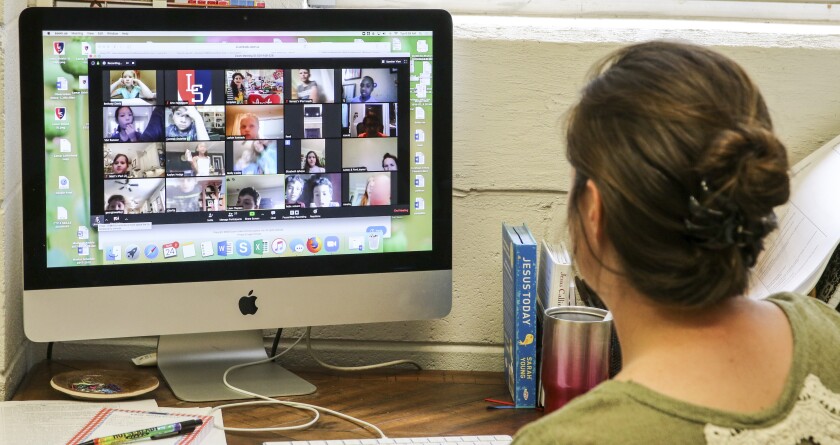
Learning remains high on my list. My ‘Second Innings’ means I am currently a student most of the time, either for Business Psychology or for my psychoanalysis training. The brilliance of the modern digital communications world means that I can learn and not feel I am missing much from the shared seminar rooms and university location that I started in when I signed up for the degree. Obviously, it is not just academic courses that are available online. I love the many things that are being suggested to me as things I may like to learn. I doubt I will become multilingual, but I may cook a little better, or improve my at-home workouts.

Family, alongside health, may be the greatest of pleasures. Perhaps more than a ‘simple’ pleasure – family harmony can be complex – but undoubtedly, family is a pleasure. In my case, as I blogged recently, we have become a Zoom family. As my youngest said today, we are making more effort than we did when we had more freedoms and being in touch was, arguably, easier. My sense of pleasure and excitement as the time for our calls comes around is high. The anticipation of seeing them all and hearing about everyone’s coping mechanisms, and latest cooking adventures, is as strong as the way I felt as a young sportsman pulling on his boots pre-match, or strapping on the pads before going out to bat.

For many people though, family currently represent more worry than pleasure. It may be elderly and infirm parents in care, or too far away to visit and to support. I am especially fortunate. My parents are healthy, and living in their own home. My brother lives nearby and is able to respond to anything that they need. He (socially distanced) gets to visit them daily when they take their afternoon walk through some woodland near to their home. He sends me photographs so I can enjoy seeing their good health and updates me on what they make of how the authorities are coping.

So, I thought of what a couple of ‘lockdown’ weeks had done for my appreciation of ‘small pleasures’, what I previously called the small peaks of pleasurable experiences. The first of my new appreciations is birdsong. I am sure it is because the sounds are no longer much muffled by traffic noise, but I swear birds are singing louder right now. I am not very good at identifying birds, via song or plumage, but as a boy I was quite keen and had a well-thumbed ‘Observer Book of Birds’ to help me.

I think that our avian friends are becoming more confident too, with fewer people about. I was able to walk up close to a completely unperturbed duck near the London Stadium a few days ago to take a picture. Back home, looking at my little balcony, I often see blackbirds or magpies, perched on the bars of the balcony. That balcony is a simple pleasure; I can bring the outdoors in, even when restricted from going out. But this week I had a visit from a blue tit, not content with the balcony as a perch, it hopped on to the little table that I have outside the doors and calmly looked into the flat, and regarded me in a slightly bemused way.

Suddenly, nature had turned, and the animal kingdom was looking in at me, zoo-like. I was never much of a one for appreciating nature, although I like Alastair Campbell’s ‘Tree of the Day’ these days, but I now understand why there is a view that being ‘in’ nature and ‘at one’ with it, is genuinely therapeutic.

My next new ‘small pleasure’ is a slightly guilty one. It feels slightly naughty to think that eavesdropping is a treat to recommend and enjoy, but many people will be living in more cramped spaces, and with some losses of privacy compared with, ‘normal’, right now. My eldest is working from home. She works in PR. We keep to our separate areas of the flat in the day and ‘meet’ in the evening to plan and prepare a meal and to share a GnT, more often than not. However, she has many conference calls and Zoom meetings and I can overhear/eavesdrop. It is a pleasure to hear how impressive she is. And I can listen when she is typing up a document, or designing a ‘deck’ as I believe is the right parlance. She seems very diligent and very competent and that is quite a big, simple pleasure for a father.

How to make the Perfect Poached Eggs - YouTube

She and I cook for one another in the evenings. We do this more than cook together, although we are good kitchen mates. It means we have eaten well; especially so in my case, as her repertoire is extensive and embraces plenty of international cuisine. I am enjoying the fun of looking at the fridge and cupboards and deciding with her, what we can create with our limited ingredients. The BBC’s brilliant Coronavirus Newscast, daily podcast had a recent episode with Nigella Lawson making suggestions about what to do with minimal ingredients. It was funny, and mouthwatering, and left me feeling inspired, and more appreciative of soy sauce and pasta.

However, the small pleasure that I note, is the delight in simple foods. In the flat, we had some goats cheese and some crackers. My daughter suggested I had a few crackers with the cheese and drizzled some honey on it and then sprinkled it with pepper. What an explosion of tastes! Today, I poached a couple of eggs and sat them on buttered toast and again, milled some black peppercorns to complete the meal. I swear they are the best poached eggs I have ever eaten. I had forgotten what a satisfying meal they are.

I blogged about podcasts a little while ago. There may not be much that is simple about the delivery of podcasts to me, but enjoying them is a simple pleasure. Alongside it, though, I have found that the past fortnight has re-engaged my love of music. When the pair of us meet for our evening meal, one of us chooses the music and the playlist. Schubert, Billie Holliday, Joni Mitchell, Johnny Cash, and REM have all improved the mood since lockdown, and I think what lies ahead is musical exploration, as much as revisiting past favourites.

Connectivity and conversation are great and simple pleasures. My son told me how his generation, which had previously treated ‘phones for data, gaming and communicating by text, have discovered that they make good talking devices. It seems his network are much more in touch than they were. I see it in my own friends, some of whom I rarely see or chat with, but who remain valued friends. Suddenly, there is a noticeable increase in traffic. And, I feel a joy when someone gets in touch, especially if it someone with whom I have been in infrequent touch.

My other simple pleasure is enjoying other people’s creativity. As a regular theatre goer and gallery visitor, I had much of this in what I think of as the ‘pre-COVID’ era. But the ingenuity and the skills displayed across social media recently, have been among my greatest joys of the past fortnight. I like stars like Gary Barlow doing his ‘crooner sessions’, and I love Sir Patrick Stewart reading his ‘Sonnet a Day’, but the peak was to see the Marsh family deliver their witty and exceptional COVID take on the ‘Les Mis’ song ‘One Day More’.

Chess, Chess Pieces, Chess Board
What a great game! Simple, no, but simply pleasurable, yes.

I hear that for those who are not home alone, that board games and jigsaws are enjoying the popularity they have probably not had since my schooldays. My simple pleasure has been to rediscover chess. I was never a good player, and I do not expect to be one, but I have found a website that allows me to play my son, London against Newcastle, and playing chess turns out to be an especially gratifying simple pleasure, especially when the opponent is someone you taught the game to, and you know, is better than you and will beat you.

Two other simple pleasures that the current situation makes me especially aware of – first, digital imagery. I mentioned that my brother is able to keep me in daily touch with how well my parents are looking and bearing up. I also get enormous pleasure from the pictures my daughter takes on her exercise walks from the flat. I have the obvious bias, but I think she ‘has an eye’ for a good image and I love seeing what she records. I have a great friend, Pammie, from working together at a couple of the investment banks. She records a daily diary with a dozen or more images from her perambulations around Greenwich and Blackheath. She too, has an eye, but it is the brief short and always sunny commentary that I enjoy. I think this relates back to sharing. I can get pleasure from the joy she feels, communicates and shares.

Lastly, walking. Since I moved back into London, I have walked like I never did when we lived in the country. Before the lockdown I walked 8-10km/day for the past couple of years, as a Second Innings lifestyle enabled me to take the time to walk everywhere, rather than jump on a tube or a bus. Even so, I walked purposefully, like a man in a hurry and noticed little. Now, I am walking with my head up (it helps that there a fewer pedestrians and less threat from cars) and noticing so much more.

As a long time admirer of London cabbies’ ‘Knowledge’, I am now building up my own internal map of routes around town. The greatest joy is to realise that London is much less big than I thought. I can walk to King’s Cross from home and back via Bloomsbury and the City. I have walked to the London Stadium at Stratford and back. To the O2 and the Cutty Sark and back. Also, to the other side of Westminster Bridge and back. These all, are not much more than a dozen kilometres, and all have lots of alternative routes. Getting to know London better, whilst getting exercise, staying healthy, working up an appetite and taking a few snaps of my own – that is a simple, but also a ‘great pleasure’

Stay well, everyone.

Who’s Zooming Who?

“Zoom” class

A little over a week ago a seminar leader at a British Psychoanalytic Association meeting that I was attending said, “we may have to go online, to Zoom our next meeting”. “Zoom?” I asked, perplexed. “It’s like Skype, only with better encryption”, she replied rather airily. “Oh”, I thought and kept it private that not only had I never heard of Zoom, but though I had heard of Skype, I was a Skype-virgin.

Within days my university was suggesting that next semester’s lectures and seminars would be online and would probably use Zoom. My own personal analysis sessions came to an end and after a couple of telephonic sessions over WhatsApp, were initiated over a Zoom connection from the start of this week. We have had three sessions. Two went well, but one was no good because she could not hear me, even though the video worked. I had changed nothing and I checked various mute and settings buttons but to no avail. This may be a precursor of a lockdown lifestyle. Where once I would have inconsiderately cursed, asked a younger, brighter colleague what to do, then called the anonymity of a ‘help desk’ at work; now I have to figure it out for myself. It may be a good thing.

I saw a wonderful twitter comment

Jenna Omeltschenko (@JenChenko) Tweeted:

Last week I didn’t even know what Zoom was and now I live here. I live in the Zoom”.

and I started to think about what it could do for me. I have one child in Manchester, but she is fortunate that she is sharing her living arrangement with the boyfriend. I share a flat with my eldest and we have been keeping ourselves grounded for a while now, because her boyfriend is unwell with the fever and coughing symptoms. No damage to our sanity yet. My son is not so fortunate. He went into early self isolation because his flatmate was coughing, although appears not to have been afflicted and has gone home to the US, subsequently. As a result he has not seen his girlfriend for several days and is now resigned to weeks, perhaps longer, alone.

I was worried about what that might mean for his mental wellbeing and so we started a regular daily call. We decided, as new Zoom users, to schedule our own meeting together so that he had some human face time. As it is, he and some former schoolfriends had used the ‘houseparty’ app to get their connection a little more ‘real’, and so, he has not been totally starved. However, we thought that a ‘family meeting’ might work and I asked his mother to join in. My eldest was busy working, and on her own conference call, but this afternoon we had a four-way video meeting via Zoom – and very enjoyable it was too. Given how technophobic both my ex and I tend to be, this represented a huge triumph and I could tell she was as chuffed that it all worked, as I was.

When I have my psychoanalysis sessions, my analyst and I greet each other cordially over the video screen, but then turn the cameras off and I start my free associating and she provides the occasional interpretation. However, the seminar I did with my fellow students at the BPA last week was very interactive; having multiple contributors is both a benefit and a distraction. I had not yet worked out how to display all the speakers at once on split screens and so, I was only seeing the individual speaker pop up in front of me each time. But I have cracked this now.

Given how psychoanalysis is a window into the darkened interior of our unconscious, this window on window on window structure had me thinking about all sorts of implications and insights. How would Freud have regarded it? What Zoom does, in that context, is gaze in on people’s interiors, psychically and literally. I gather that Zoom veterans put up some sort of virtual background to their screen so that they do not reveal the untidiness of their home, or the datedness of their decor! But how we react to the gaze of the camera and to seeing several contacts at once, including our own face is different to how we would be in a meeting in an office where we have little idea what our own expression is revealing. We reveal ourselves to ourself in a way we cannot in the physical world.

It will not be the only device or tool that becomes familiar to us in the current circumstances. We may find we cannot live without it, just as once we would never have felt we needed social media. In an unrelated event, a friend and ex-colleague messaged me today via Facebook. He had decided to make a weekly connection with his many friends for a sort of ‘check-in’. It is a very good idea. The busyness of our lives means we often feel we do not have time to interrupt others, and that they may not welcome it, but time is going to stretch now, and filling it with connection, and small gestures of kindness and sociability will be good for all parties.

Who's Zoomin' Who? - Wikipedia
Who’s Zooming Who – Aretha

Anyway, one of the keys to enjoying living is to keep being open to new experiences and to keep learning. Here’s to Zoom(ing). I shall be using a good deal more. Let me know if you have had a positive or a negative Zoom experience. I am going to “live in the Zoom”.

A tale of two cities (and two journalists)

London – the riverbank from behind my flat

My father is from north London. My mother is from east London. I was born on London’s fringes – shout out to Barnet – but raised in Essex. I moved back into London in the very late 1980’s, just about picking a residential property market peak. I cut my losses and moved out again. Like my parents chose to do, I raised my family at the edges of commuterland. My father moved to Chelmsford, when the electrification of the line made the commute sufficiently timely. A generation on, I moved, way out to the edge of Suffolk, and commuted on an inter-city from Manningtree. It was over twenty years before we moved our almost adult children back to London. Although our accommodation had shrunk and we had some adjustments to make, I noticed how happy it made me. It took a while for it to dawn on me why that was – I am a Londoner – and I was, at last, truly home.

Moving into the city has become much more fashionable than moving out – the decision that both my father and I had taken, believing it to be the best, as well as most affordable option for raising a growing family. My pleasure in my new living arrangements came from the ending of my commuting lifestyle – I was a few DLR or tube stops away from work, but actually a reachable and doable 3m walk. Even more enjoyable was the fact that I was a (decent) walk from my favourite cultural hubs (Globe Theatre, Tate Modern, Young and Old Vics, National Theatre, Barbican, BFI), and using them more. I had started at university, and that too was walkable if truly needed, or served well by a bus to Russell Square. The reasons for more public movement into the city than movement out, though, was the transformation of London into a culinary hub, a revived clubbing scene, with a cafe culture that had once seemed to exist only on the other side of the Channel. It was the best place to enjoy oneself.

Paris – a great city; about to become greater?

A week ago, FT journalist Simon Kuper wrote about how Paris was preparing its development to be the city its citizens might want to enjoy in 2050. He noted that a housing boom has been exacerbated by the fact that it has more Airbnb listings than any city bar London. He compared it with London, and with San Francisco, Berlin and New York but noted that it was the only one of the named cities to be attempting to remake itself as it embraced the challenges of climate, inequality, planning, infrastructure and planning.

I was not aware that it was building a “whole new Paris” with 68 metro stations being built to connect the suburbs. At its heart, it is taking the Peripherique ring road out of its current place as a kind of moated defence to ‘core Paris’. Post-war Paris saw the suburbs grow and sprawl, but with inadequate or no planning. The poor transport options drive suburbanites into cars and exacerbate the pollution in the inner city. Kuper argues that the gilet jaune movement is partly “a crisis of failed urbanism”, quoting the deputy mayor.

Grand Paris Express is a large part of the answer. It is Europe’s largest infrastructure project and will connect the suburbs to central Paris, but also to one another. The metro sites are being developed in conjunction with large scale housing and public amenities. Some will open for Olympic 2024 year, and all 68 are expected to be completed by 2030. Elizabeth Line, I hear you query. Hmm. I confess a little Londoner envy coursed through me as I read this. We have some housing development out at Wembley and some exciting plans for Canada Water, but this feels much more of a ‘vision thing’ than we can or will deliver.

The new metro and a commitment to bike lanes (one on every street by 2024) are anticipated to allow the Peripherique to become a tree-lined urban boulevard as Paris gets serious about the Paris Accord on Climate. Urban forests and rooftop gardens combined with architecture using biomaterials (largely wood, to the unsophisticated like me) will provide cool spots for future heatwaves. This is in a city that already meets its new homes target annually (currently 70,000). What a prospect and competitive challenge for London’s next mayor, whenever he or she gets control of the reins.

Since my schooldays London had been transformed socially and architecturally, and in pretty much all aspects for the better. The more it attracted inflows of people, the more opportunities were thrown up, and the more great services were provided to cater for the growing and affluent population. When I was a boy my grandad drove me around Silvertown and to my nan’s florist in Canning Town, opposite West Ham public baths. I have watched and admired what regeneration is an can be. It was not unique to London – the city has become the place of ambition and regeneration internationally. The suburbs and even more so, the coastal towns, have been much more about resisting decline and decay. Cities have seen average ages of their growing populations fall; outside cities, the mix effect of leavers versus new arrivals has driven average ages up.

The truth is, that in London it is always a sickly season. Nobody is healthy in London, nobody can be. Jane Austen 

Could anything, not least our current health crisis, change this? In a great article this weekend, another FT journalist, Janan Ganesh, discussed the prospects for London after seeing a friend move into a Canary Wharf skyscraper. He reminded readers that pre-war London housed almost 9m people before depopulating until the 1980’s. Population trends in cities, especially London, correlate with crime (inversely, as you might expect) and with air quality/pollution. He noted that in the middle of the last century the suburbs were hailed as ‘The Future’. Now, he wonders whether COVID-19 will have an impact on trust, and the desire to be a city dweller. Physical proximity will become anathema. Restaurants and cafes will be places to avoid. Businesses will fail and new entrepreneurs will not like the potential reward relative to the risk to their capital. Gyms and yoga studios may get you healthy, but what if it is only to pass on an invisible foe that makes you fatally vulnerable?

His speculations and analysis had me thinking about the attractions of the city. I have eschewed property ownership here because, love the city as I do, I thought that it was (and still is) insanely priced. Boxes in the air, with no claims on the land upon which they are built, routinely priced in excess of £750k, often upwards of £1m. Really? What happens to that supply, much of which has come on stream in the past half decade, when Ganesh turns out to be right and London starts to depopulate? The state may be buyer of last resort and perhaps the housing can become ‘social’, but capital values will be sliding, materially. If depopulation is the next trend, then businesses do fail, and fewer start up. Support for culture narrows, and the city’s appeal and inherent charms moderate.

It is not all bad, though. In another article, Kuper used this weekend’s paper to talk about the impact the virus is already having and will have on green policy and its impacts. I am sure many people have been struck by the pictures from Venice of the clear(er) waters and the abundance of fish, to say nothing of swans and other marine life. He thinks the events of the past week have given people more confidence in the potential and capacity of remote working. In turn, that should lead to weaker demand for expensive office space. Some could be repurposed for housing. Employees will be spared the mental pressure of the commute and may be able to use the saved time to improve their physical as well as mental health. Business travel will be cut, even without the phenomenon of ‘flight shaming’. He notes some studies that suggest it is possible that latest data from China means that the improved air quality will have saved at least as many lives as COVID-19 has taken. Like Ganesh, he hints that the need to be a city dweller is going to be diminished.

What does it mean to me? A confession. I felt rather smug as I contemplated much lower property values. Then, I told myself off for having such ungenerous thoughts, and not thinking of the pressures/distress that may bring to many property owners. I recall how I felt in my ‘unsellable’ mews house in 1991/2. (Wish I still had it!) Would I not want to live and work in London, if it was to ‘depopulate?’ I think the answer is no. I have lived away from its urban charms and had the pleasures of woodland and fields surrounding my home. For many, who have a more intense relationship with nature, than me, that is what they seek.

But I like urbanity. I like London’s gorgeous buildings, fabulous architecture, it’s extraordinary paths and that it is not grid-like like New York, or planned in the way Paris was. I like its mysteries, its history and above all its access to culture. I love its parks and the river. When we are all able to share public spaces again, I expect theatres, cinemas and art galleries will draw me quickly, as well as the occasional visit to test my equanimity at West Ham’s stadium. I shall want to spend time at Lord’s too.

You find no man, at all intellectual, who is willing to leave London. No, Sir, when a man is tired of London, he is tired of life; for there is in London all that life can afford. – Samuel Johnson

To conclude; there is some good to come from the recalibrations we are all rapidly making and having to make, and I think Kuper’s love for his adopted Paris, does remind London it could do better. Also, I think Ganesh is on to something about how attitudes to the charms of the city, and especially London, may alter after we get beyond the worst this virus can throw at us. But London, as Peter Ackroyd explained when he personalised it in a ‘biography’, is special, and as a Londoner I want to be in it. If much of it gets repurposed from high end residential to social housing communities, or if office space gets transformed to dwellings as Kuper envisages; that may be a good thing. If communities become more communal; if the refuse collectors and shelf stackers that I admired working today, to say nothing of the nurses, feel that this is where they want to be, and it is affordable and welcoming, then it will remain a great city.

The man who can dominate a London dinner table can dominate the world. Oscar Wilde